
An Island unto Itself *
By Mark Dahmke
Presented at the Tom Carroll Torch Club, Lincoln, Nebraska, January 20, 2014
* Kamaui Aiona, director of the Kahanu Gardens once described Hana as An Island unto Itself. I thought that would make perfect title for this speech.
The legends of the demigod Maui span the south and central Pacific from Hawaii to Samoa to New Zealand and extend back at least 1500 years. The stories vary with each island group but he is revered as a hero who raised islands from the ocean, lassoed the sun to slow it down, and discovered the secret of fire. In the more recent versions, Maui lived in a place called Hana on the island now named after him.
According to one legend he caught the islands of Hawaii on a fishing trip with his magic fishing hook. The story goes that he and his brothers hooked the bottom of the ocean and pulled it to the surface, but when they quit paddling their canoe to look back at the land they caught, it split apart into separate islands.
Maui was later persuaded by his grandmother to slow the sun down, so she could grow more food and dry her tapa cloth. Maui agreed to help, so he stood on the summit of Mount Haleakala and lassoed the sun’s ray legs and broke them off one by one, threatening to kill the sun if he didn’t slow down. The sun obliged.
It is said that Hana’s scenic beauty was first discovered by Maui, whose favorite scene was watching the gray misty rain roll off the ocean and sprinkle Hana Bay with rainbows. When Maui’s daughter was born he named her after his favorite view,”Noenoe Ua Kea O Hana,” which means the misty, light rain of Hana.
Noenoe loved the ocean and spent a lot of her time there. One day she met a young man named Ka’uiki, an adopted son of the Menehunes or little people, said to be the first inhabitants of Hawaii. He was protected by the Menehunes because they thought of him as a gift from Kanaloa, the sea god. As their eyes met, Ka’uiki and Noenoe fell instantly in love. They both knew they could never have a future together because Ka’uiki would one day have to return to the sea.
Noe-noe pleaded with her father to use his magical powers to keep them together forever. Maui knew he would lose his daughter, but was torn by the pain in Noenoe’s eyes.
He reluctantly turned Ka’uiki into a high hill overlooking Hana bay and Noenoe into the misty rain, her name sake. Maui knew he could always watch Noenoe with a smile, knowing his daughter would live happily ever after.
To this day the Noenoe Ua Kea O Hana can be seen coming off the ocean to gently surround and embrace Ka’uiki Hill.
Hana is a place of unparalleled natural beauty. Located on the remote east end of the island of Maui, it is often called “the last Hawaiian place.” Until the middle of the 20th century it was difficult to reach by land. Its remoteness has saved it from the rampant development of the rest of Hawaii. Hana truly is like an island unto itself.
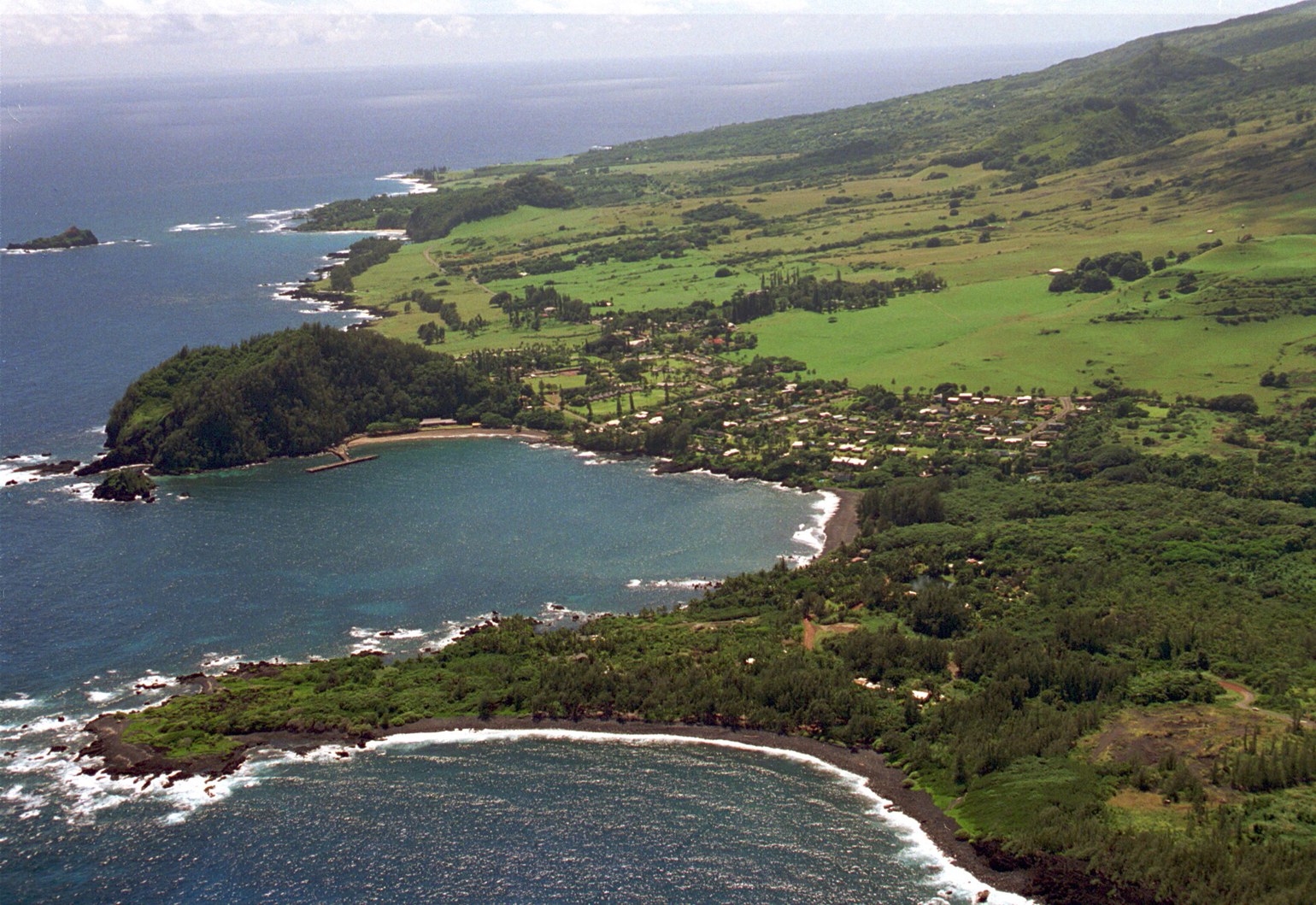
Above: Ka’uiki Hill (center left) and Hana Bay
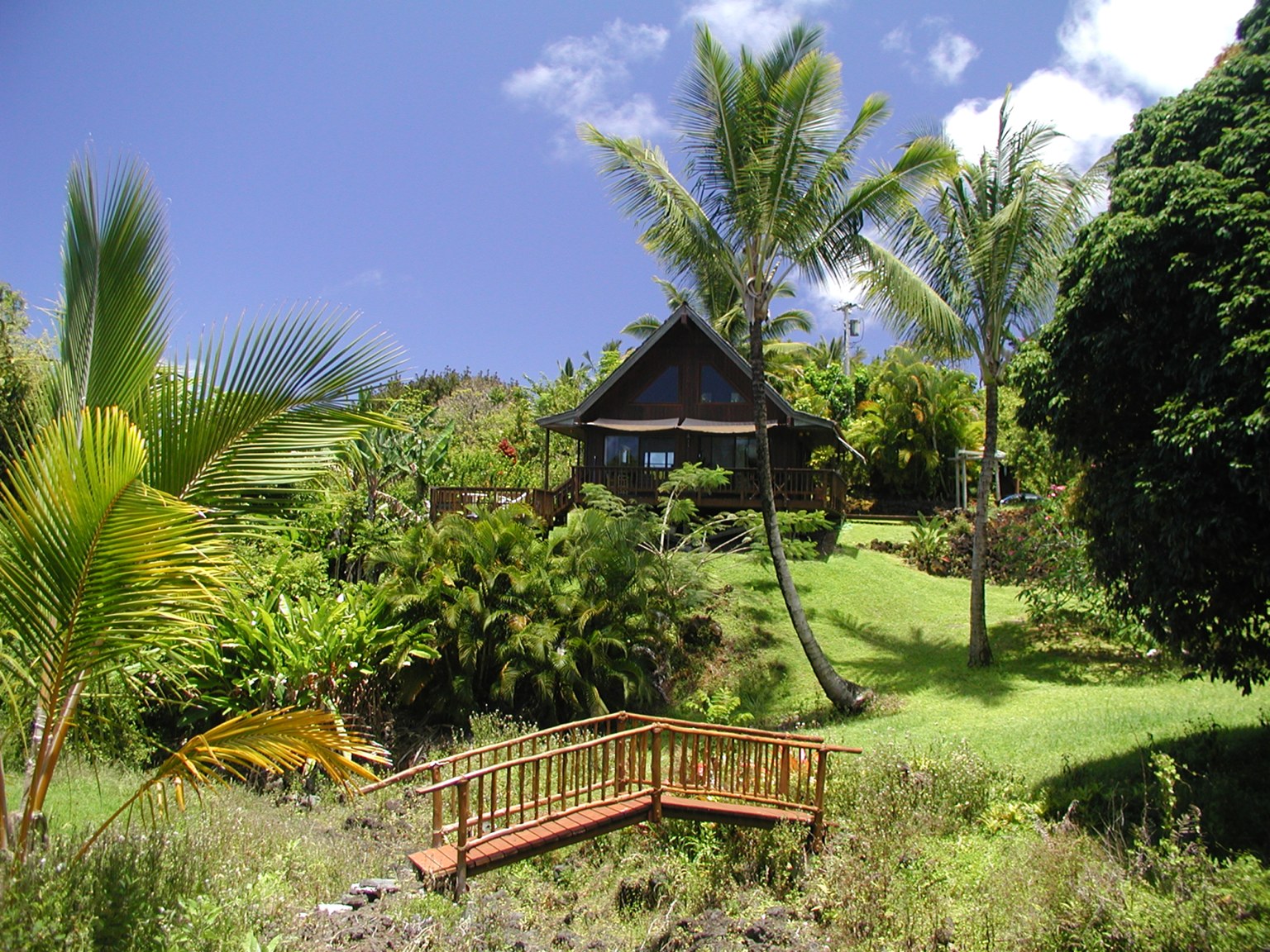
Hale Heavenly Hana (2002)
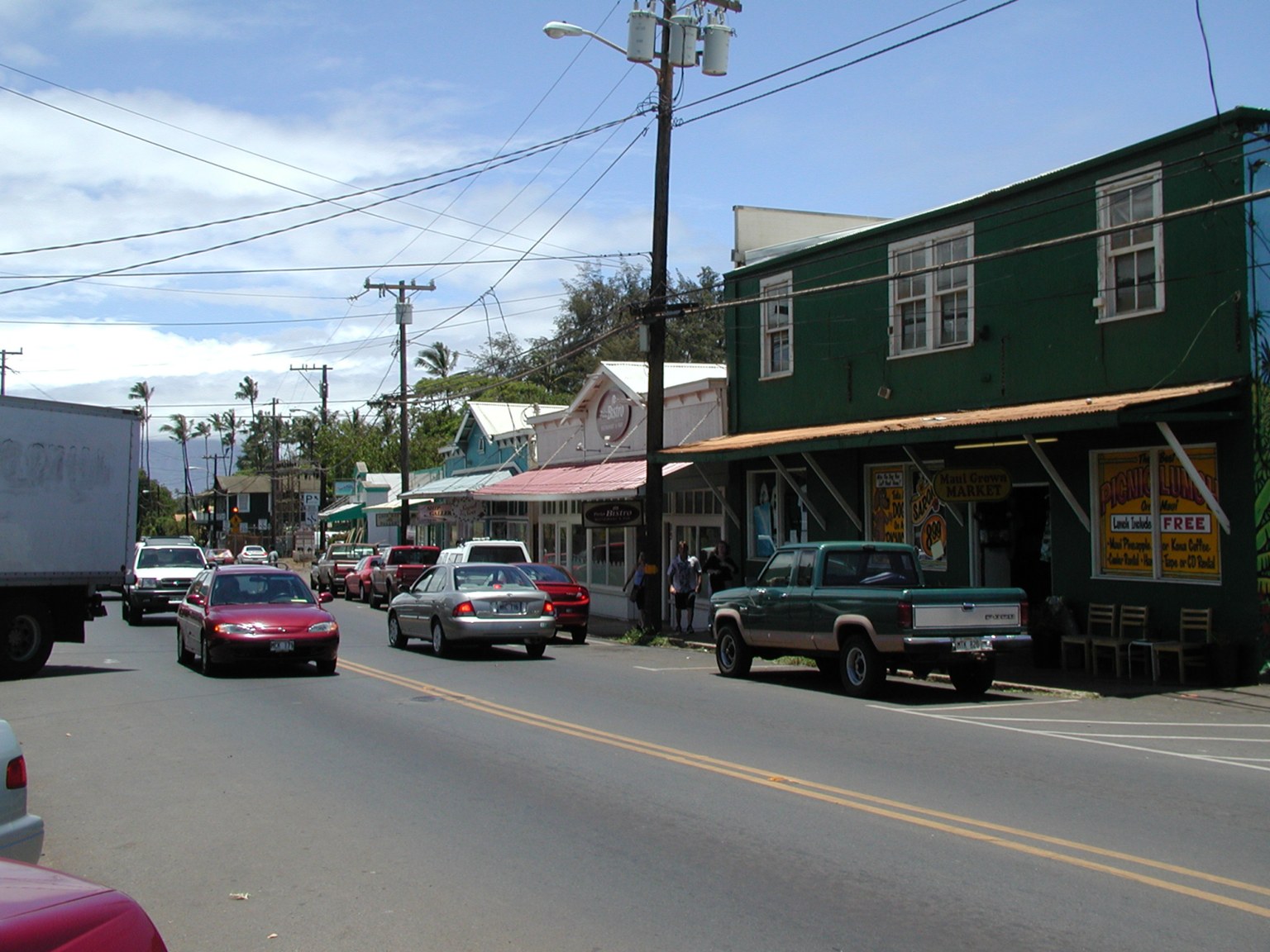
Downtown Paia
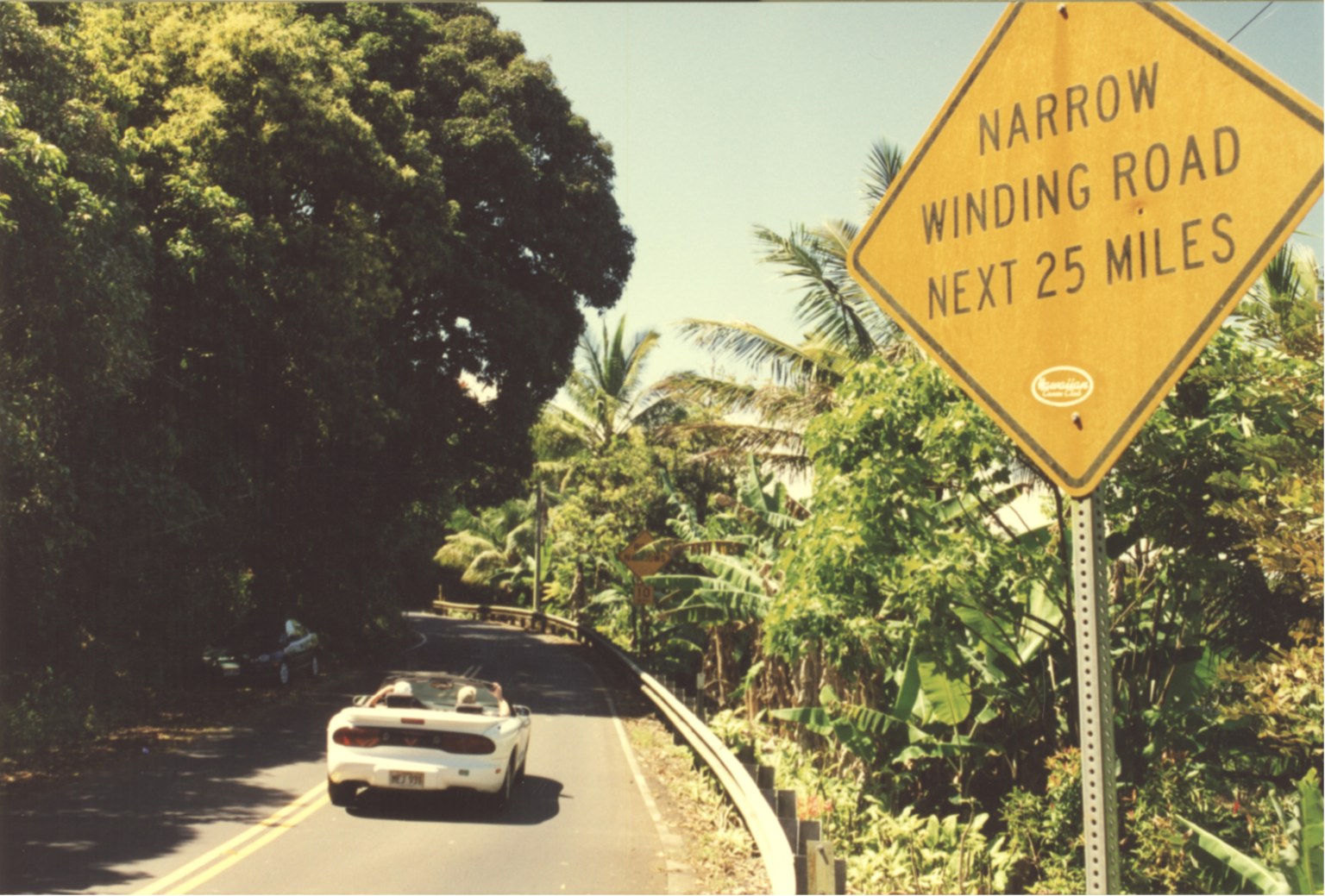
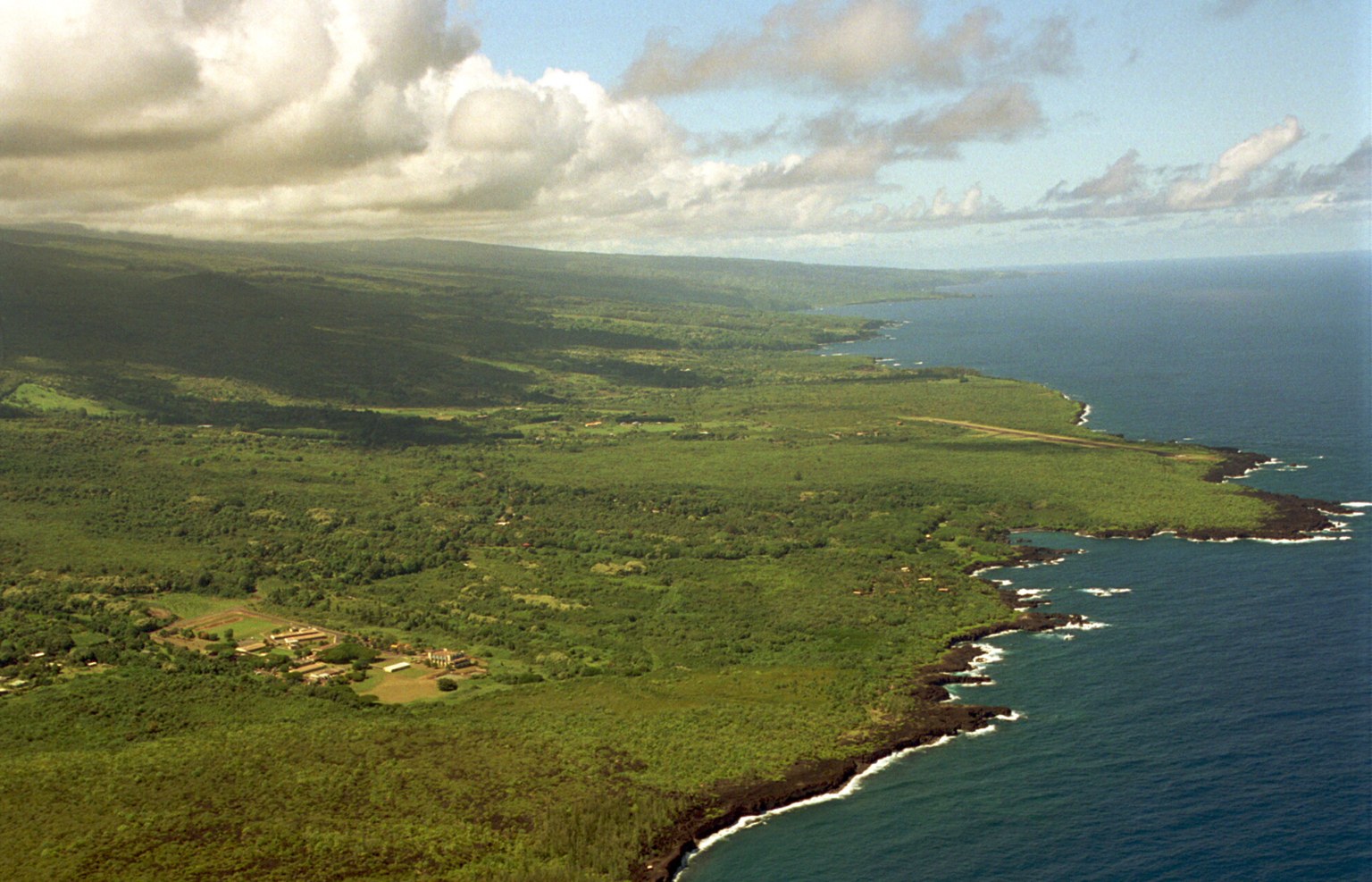
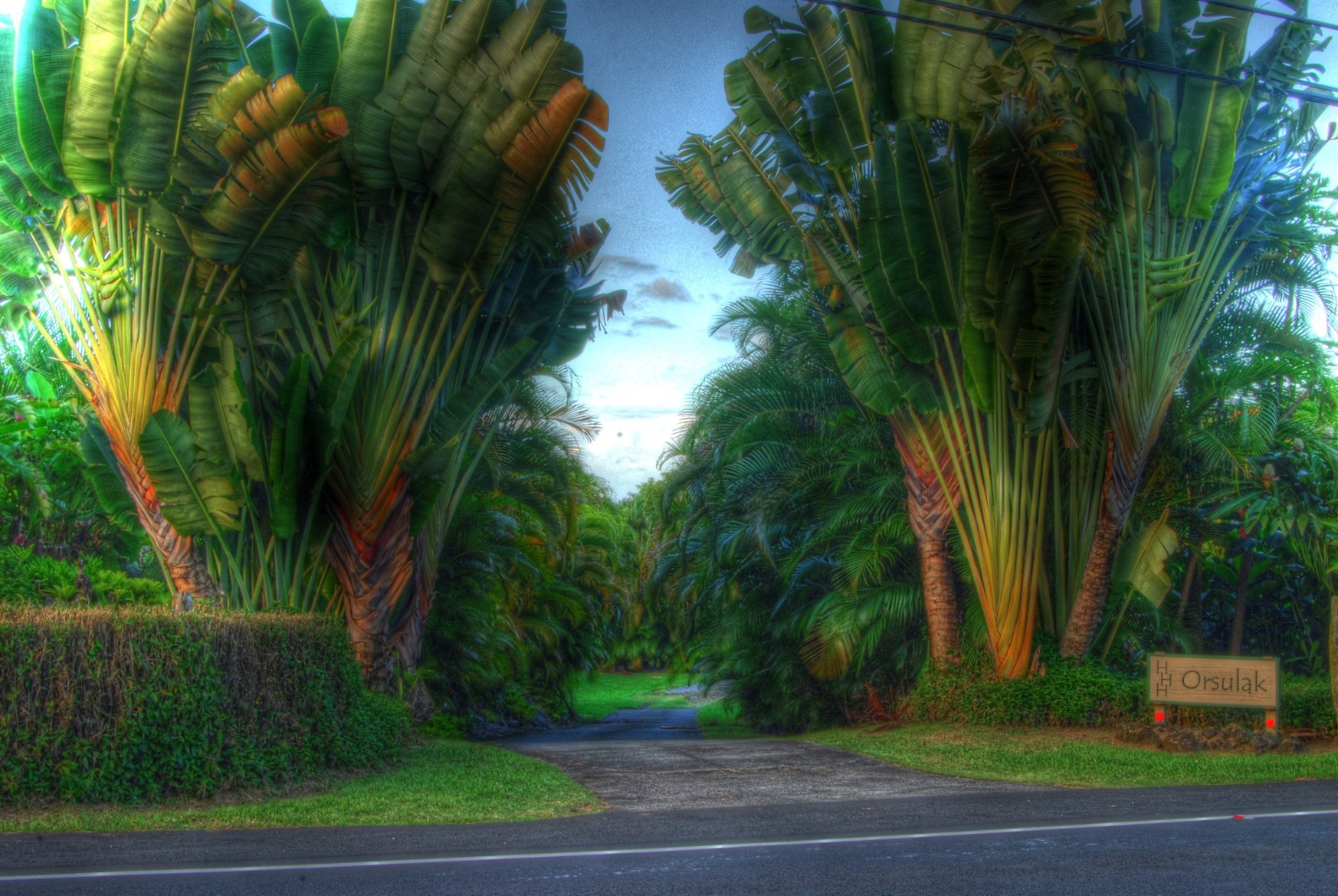
Above: the entrance to Hale Heavenly Hana
The following is a story about Hana, one particular family-owned business in Hana, the Hasegawa General Store, and how I made a connection with this remote and beautiful place.
If you spend more than a day or two in Hana you will notice the strong sense of family in this community. There are only about 1800 people living on the entire eastern third of Maui. The population is over 60% native Hawaiian.
This strong sense of community also acts as a buffer against the outside world. There is a strong desire to keep things as they are. When you leave the airport and drive into Kahului in central Maui, you might think you had arrived in some mainland port town.
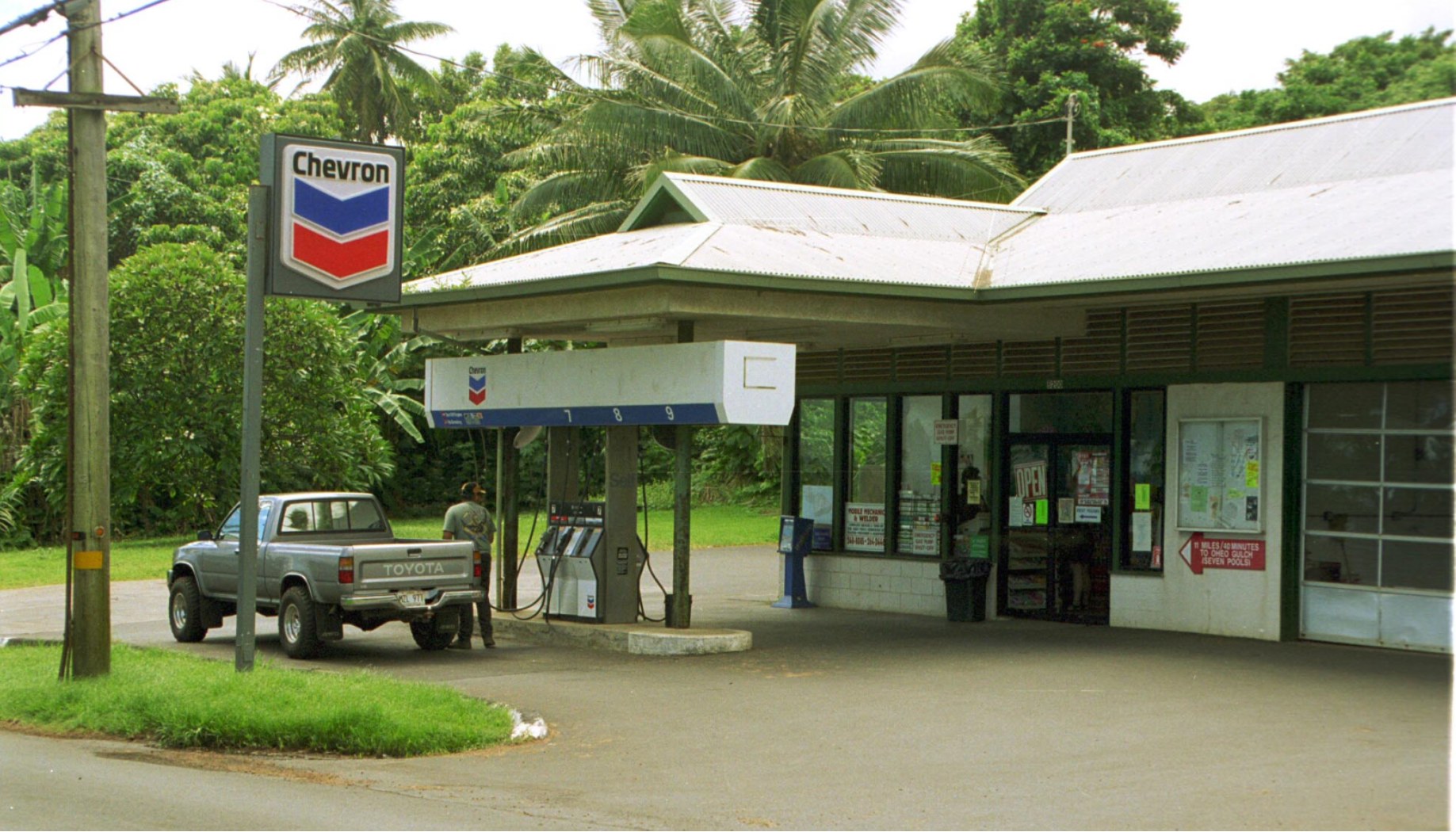
The first big box store you’ll encounter is a Walmart. All the same stores you shop in here in Lincoln dot the Hawaiian landscape. Except in Hana. There is only one sign for national brand anywhere on the 40 plus miles of the Hana Highway, once you get past the town of Paia, and that is Chevron.
Hana has its own development committee. They have veto power over any new development, regardless of what the Maui County government wants to do.
I discovered Hana by accident. By 1988 I’d been to Hawaii three times but never to Maui. While planning my 1988 trip I saw an ad for a vacation rental cottage called “Hale Heavenly Hana.” Hale (pronounced “Hall-ay”) means house in Hawaiian. The ad promised a sweeping ocean view on seven acres of secluded paradise. I immediately called the owner, Bob Reeds, who at that time lived in Los Angeles. He described the property as a one bedroom cottage perched on a hillside in the midst of a working farm filled with flowers and macadamia nut trees. Based on his description and the photos he sent me, I knew I had to check this out, which also meant my first time driving the Hana Highway.
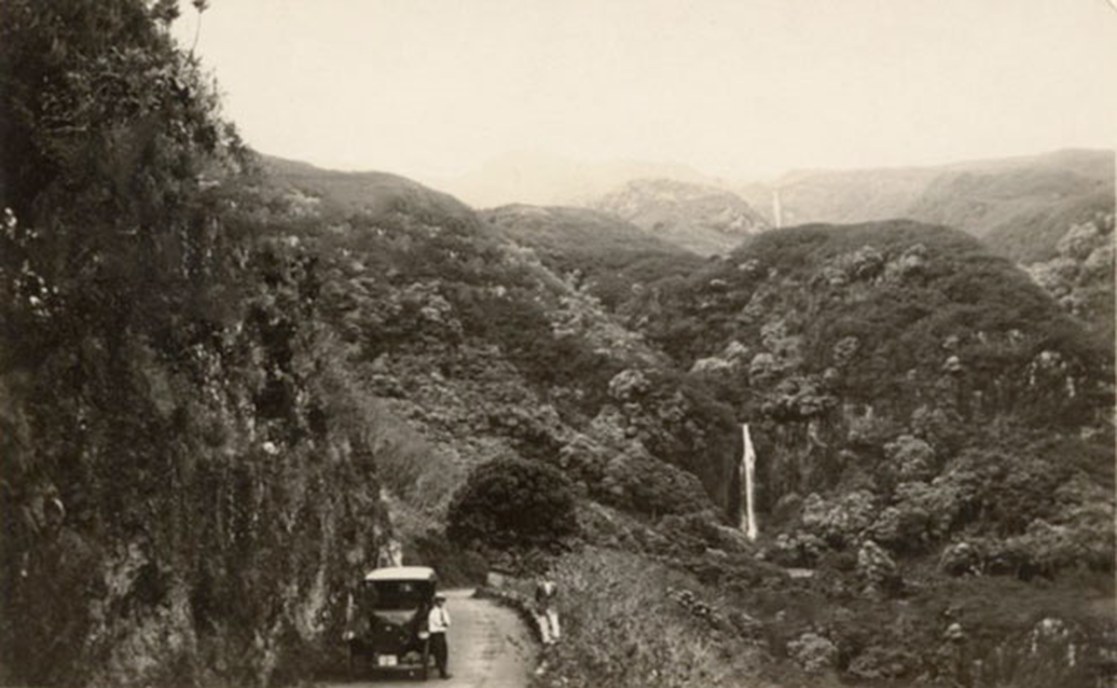
Originally a gravel road, the Hana Highway provided the first vehicle access to the town by land. Trails to Hana from “the west side” have existed since ancient times, but none would qualify as roads. In 1926 the territorial government shipped in a gang of prisoners and turned the barely passable foot trails into a 68 mile long muddy road. Later it was improved to a cinder-paved road.
When I first drove to Hana in 1988 it was undergoing a major renovation but most of it consisted of more potholes than pavement. In fact in the late 80s I recall stretches that were miles long where there was no original blacktop left - just patch upon patch.
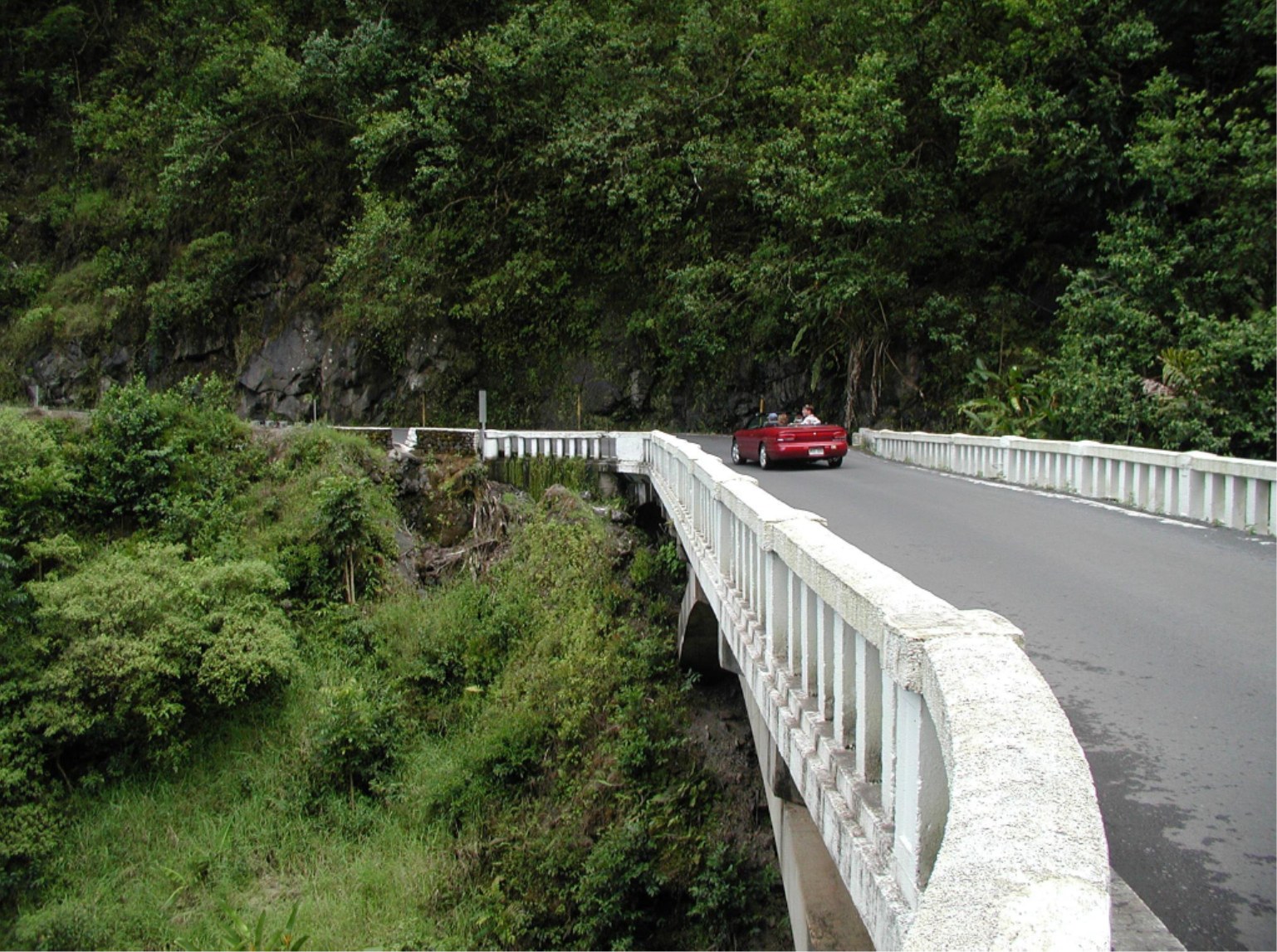
For the driver, the Hana Highway is 40 miles of sharp curves and hairpin turns, 617 of them to be exact, plus 59 bridges, 46 of which are one lane wide. For the passenger, especially if you drive the highway in a convertible, it is an overwhelming sensory experience. You quickly realize that you are now in the kingdom of the plants, as one visitor described it. There are more gorgeous romantic waterfalls than you can count, plus the occasional rainbow.
When it rains the rock walls spring leaks and water flows out over the pavement. The plants grow so quickly that it’s a constant battle to keep them from retaking the road.
In 1988 I set out from the Kahului airport and drove into the small town of Paia fifteen minutes later. Paia looks like a town out of the old west and is now a popular tourist destination filled with art galleries, restaurants and surfers. After Paia the road starts to narrow. Soon you enter the forest and the road twists and turns so much that you feel the need to slow to about 20 miles per hour. The locals fly past you and you find yourself pulling off the road frequently to let them go by. After half an hour of narrow winding road, you see an ominous sign: “road narrows.” It was at about that point in 1989, after a massive downpour, a small section of one lane of the road had simply disappeared. Not quite believing it, I slowed down and rolled down the window to look over the edge which was just a few feet away. There was nothing but a concrete road barrier between me and a 100 foot drop to the ocean.
A mile or two further down the road is another ominous sign: “road narrows.”
An hour later you begin to wonder if the road will ever end. Normally when I go to Maui, if I arrive late in the day, I stay over on the west side and then drive to Hana the next day. A few years ago I foolishly thought that after all these years I could handle driving the Highway at night. Big mistake. I realized my mistake at about mile marker 12 when it got really dark. Had I taken my anti-motion sickness pill it might have gone better. I drove on slowly and made frequent stops. When it got really bad and I pulled over, with my head hanging out the open car door, some guys in a truck came by, slowed and asked if I was ok. It was dark and they couldn’t see my shade of green. I lied and said I was ok, then thanked them and waved them on. Eventually I reached civilization but learned a hard lesson about motion sickness and night-time mountain driving. I attribute my adverse reaction to having grown up on a prairie.
On my first trip, after a two hour drive, at about mile marker 28, the terrain opened up and I could see the Hana coast. It was twilight and I made it to the house just as it got dark. Even then I knew this was a great find.
I’ve stayed at vacation rentals all over the islands but this one was special. The humid air carried the scent of mangoes, guava, passion fruit and papayas. There were more varieties of ginger and bird of paradise than I knew existed. The full moon turned the landscape into a magical place. At sunset it is not uncommon for a squall to come in from the ocean and drench the land. It’s so quiet that you can hear the approaching line of rain from a quarter of a mile away as it lands on the dense foliage. As the rain approaches the birds go silent then resume their calls as it lets up. Late at night I woke up to a faint periodic rushing sound. It took a while but I finally realized that it was the sound of the waves crashing into the rocky shore down by the airport - a mile away.
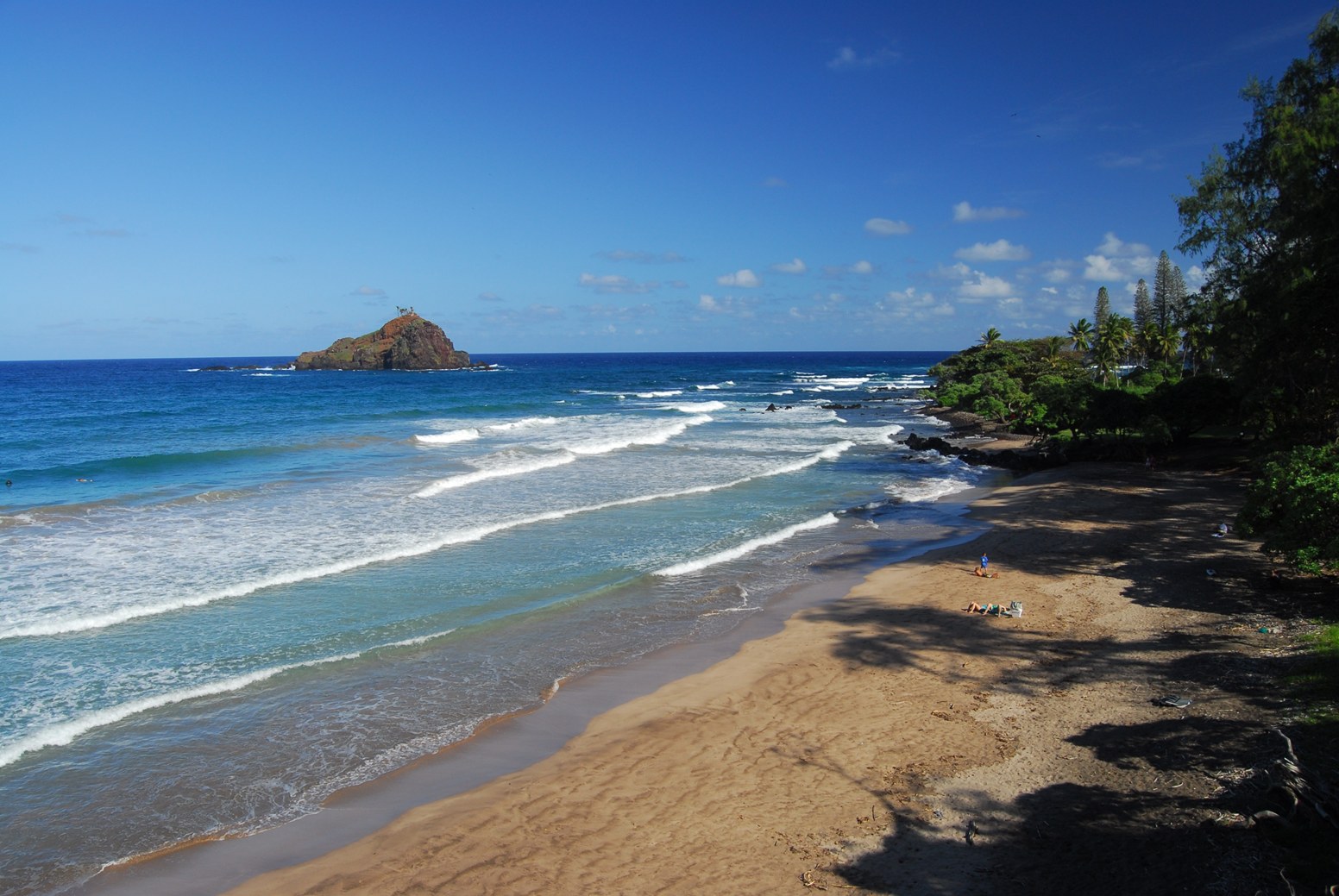
Hamoa Beach
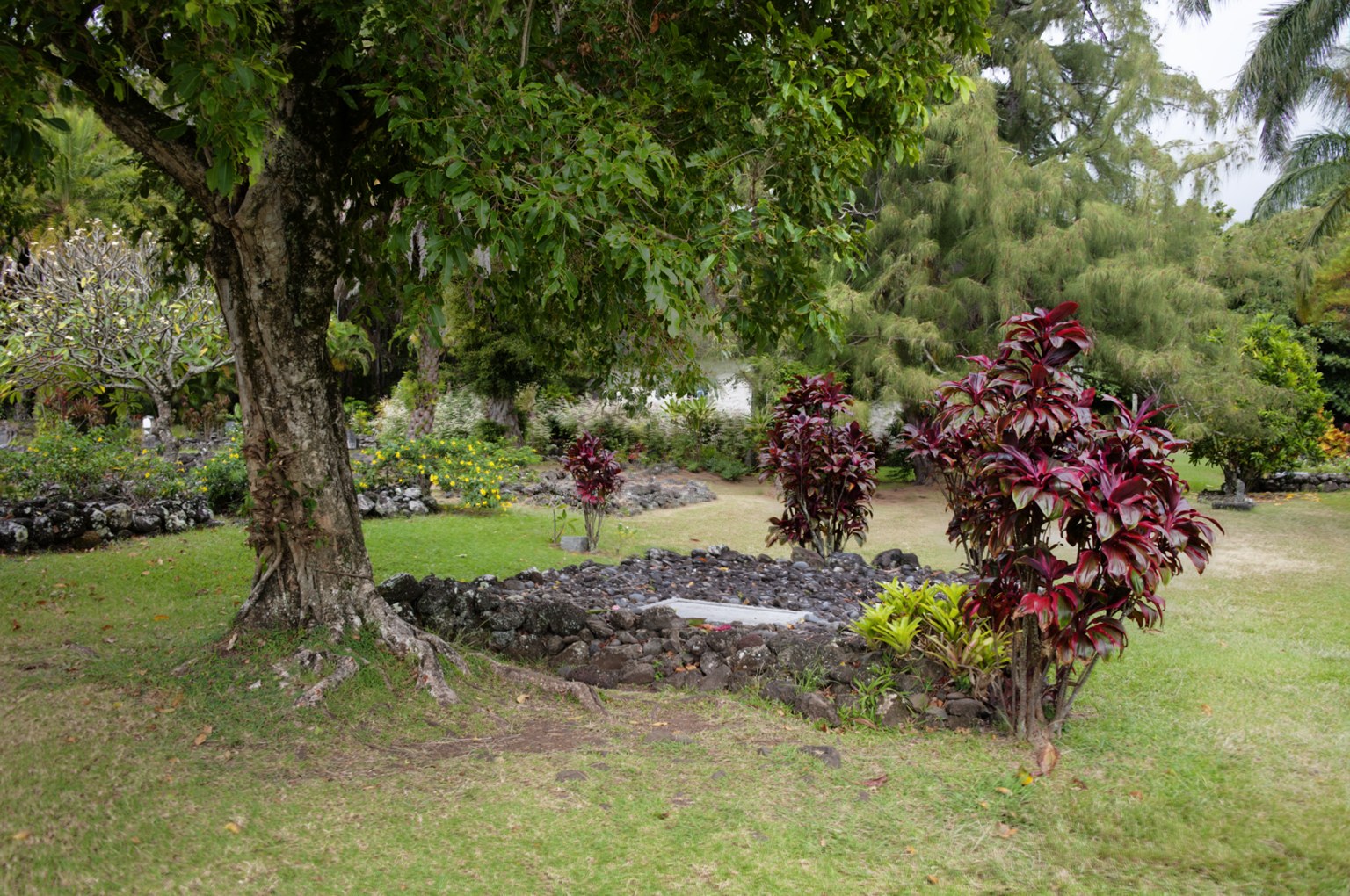
Above: grave site of Charles Lindbergh
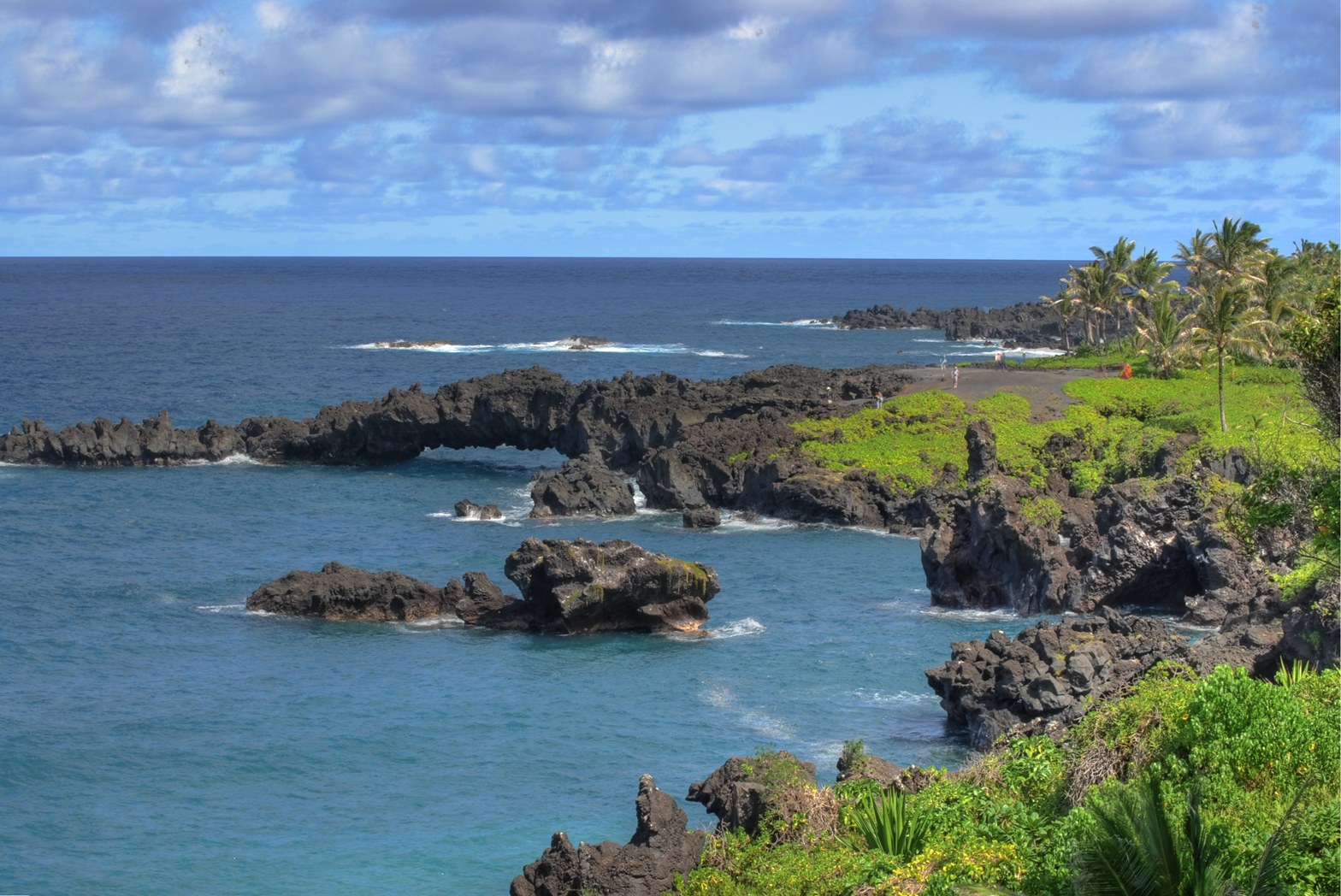
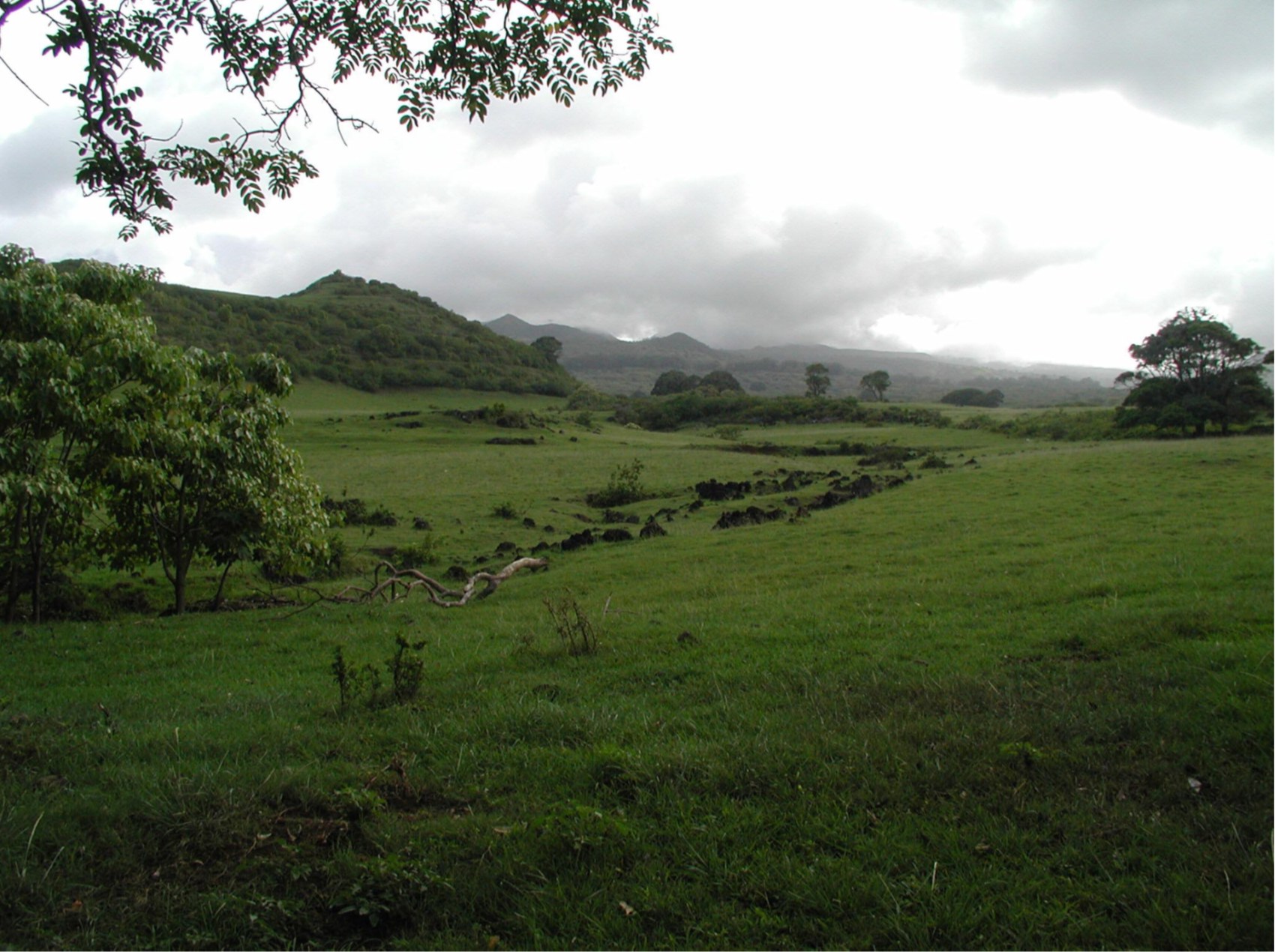
From the house to Hana town is a short drive past the road leading to the Hana airport and another road leading to Waianapanapa State Park and its famous black sand beach. After a few more twists and turns, picturesque pastures and gorgeous mountain scenery you come to the fork in the road.
Both roads lead to Hana. The lower road takes you to Hana Bay and the community center. The upper road is the continuation of the Hana Highway. Another mile down the upper road and you pass the entrance to the Travaasa Hana, formerly the Hotel Hana Maui, plus an art gallery and several churches. Next you encounter the Hasegawa General Store (which I’ll talk about later) and the Hana Ranch Restaurant. Next is the Chevron station and a few more fruit stands, and then rather abruptly you exit Hana and return to beautiful vistas of ocean and pastures.
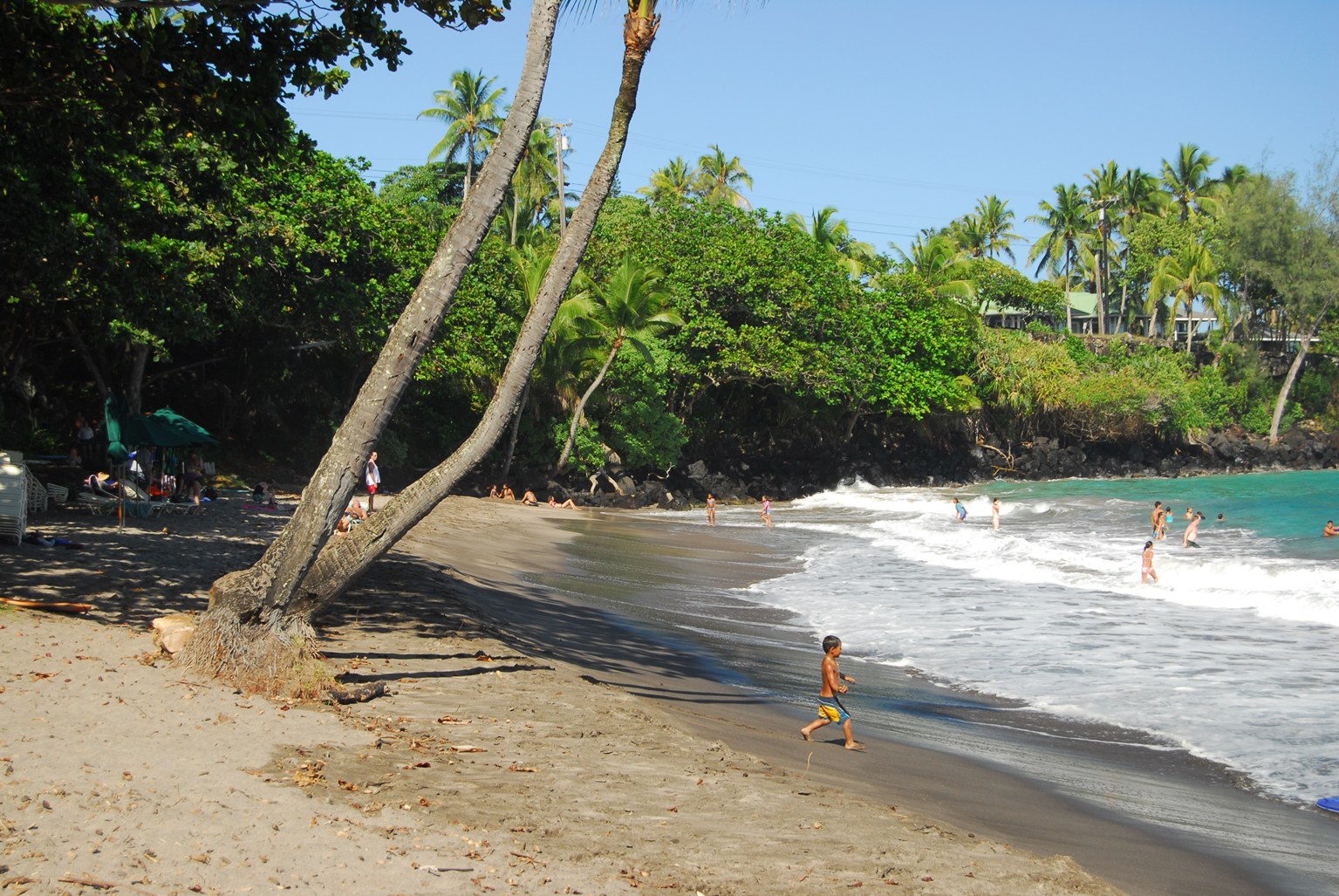
The smallness of Hana town reminds me of the town I grew up in. The Travaasa Hotel is a major presence in Hana and is spread throughout the community. Bungalows are set blocks away from the main building and dining room, and guests as well as staff use golf carts to go to and from the various buildings. The hotel also provides transportation to and from Hamoa Beach, which is over a mile from the center of town. Hamoa is a beautiful crescent of sand in a quiet bay that author James Michener once described as the most beautiful beach in the Pacific.
Hana is a very laid-back kind of place. When the surf is good, the residents drop what they’re doing and go surfing. I drove by Hamoa once a few years ago in the middle of the afternoon on a weekday and spotted several of my Hana friends heading to the beach with surf boards in hand. Life is too short not to!
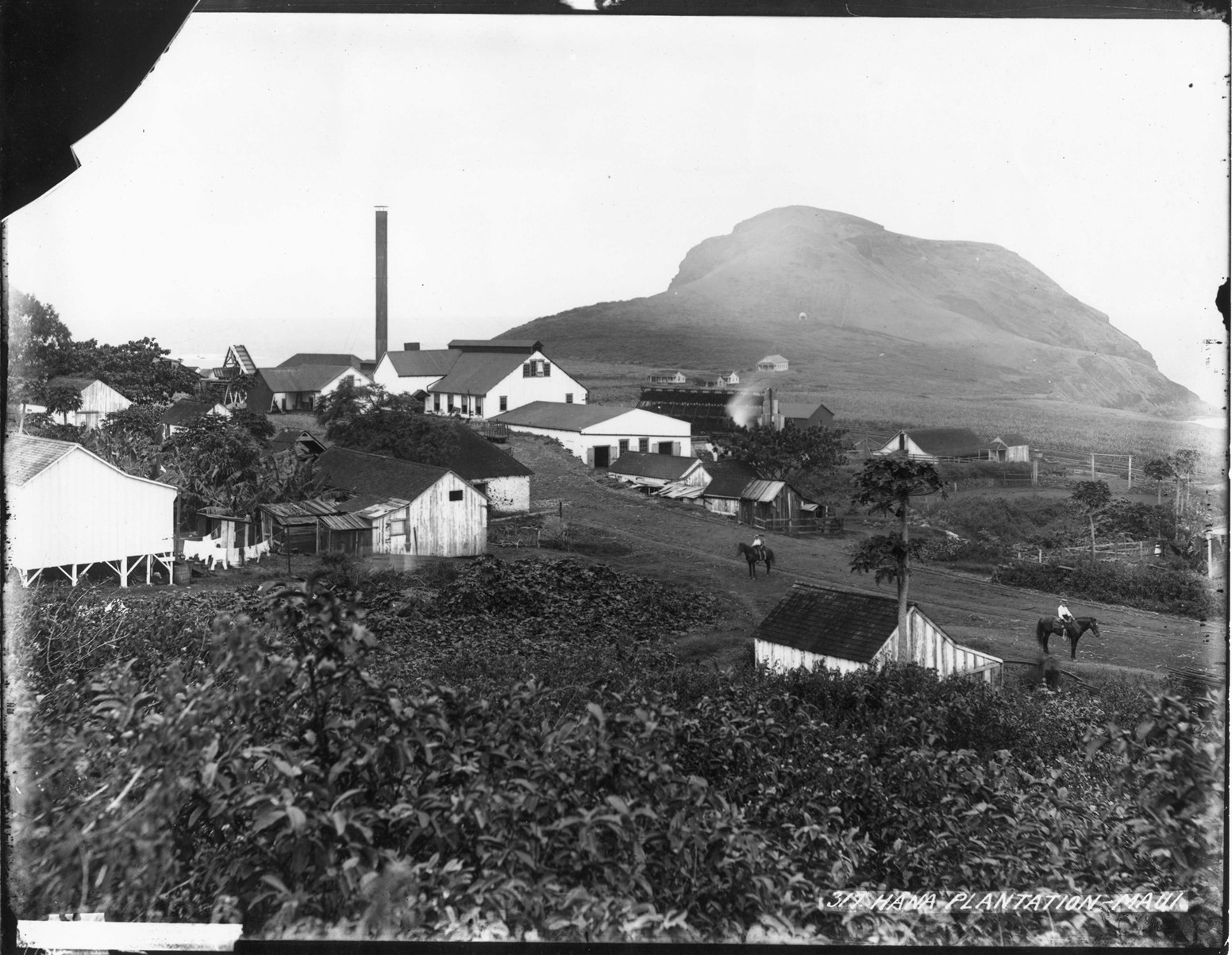
Hana was not always a destination for tourists. The first sugar plantation in the area was established in 1849, and by 1883 there were six plantations operating in the area. By 1946 the last plantation had closed, causing hundreds of workers to move to the west side of Maui in search of jobs. A man by the name of Paul Fagan saved the day. He had acquired the Hana Sugar Company in the 1930s. He lived in San Francisco but planned to eventually retire in Hana. He foresaw the dislocation of jobs and talked with the large Alexander and Baldwin plantation and persuaded them to hire former plantation workers. He also established a new economic base for Hana, which included a 14,000 acre cattle ranch and tourism.
Before WWII, if you wanted to visit Hana you had three choices - by car on an unpaved and treacherous Hana Highway, by inter island steamer or by air to a small grass landing strip near Hamoa Beach. Anyone who traveled to a remote place like Hana back then would have been well-heeled. Fagan built the Hotel Hana Maui to cater to the jet set before there was a jet set. To make the hotel viable he hit on a promotional venture that would pay big dividends for decades.
Fagan also owned the San Francisco Seals baseball team. They had to hold spring training somewhere, so why not in Hana? In 1946 he brought the team to Hana along with a group of baseball writers. One of those writers coined the term “Heavenly Hana.” Dispatches from the sports writers were printed in west coast papers, announcing to the world the existence of a new luxury resort. The resort started to attract the jet set and became a favorite spot for celebrities. The Maui media generally does not report the coming and going of celebrities, giving them much needed privacy.
In the 1960s actor Jim Nabors bought land in Hana and later retired there, but still operates Naborly Farms Macadamia Nuts. Carol Burnett, Kris Kristofferson and more recently Oprah, have taken up either full or part time residence in Hana. Kristofferson and his wife chose to raise their children in Hana, where they attended the public school. George Harrison owned an estate near Hana from 1981 until his death in 2001.
In 1963 Pan Am vice president Sam Pryor retired to a 100 acre estate south of Hana. He chose Hana not as an escape from the media but because he was concerned about the possibility of nuclear war and chose Hana as his shelter. Often described as the man who made Pan Am a success, he became acquainted with presidents and kings during his career. Lyndon Johnson wrote letters to Hana from the White House addressed only to “Mr. Sam.” Once King Leopold of Belgium came to visit him in Hana. While Pryor grilled steaks, the king asked if he could help, so Mary Pryor put him to work setting the table.
Pryor and Charles Lindbergh were good friends, having known each other at Pan Am for many years. Pryor encouraged Lindbergh to visit him, so on a trip back from the Philippines he stopped by, and instantly fell in love with Hana. Pryor sold him five acres on the ocean and in 1968 Lindbergh and his wife Anne built a small chalet.
Lindbergh spent his last years exploring the area around Hana. When he was diagnosed with cancer, he made all the plans for his funeral service and burial. In August, 1974, he was laid to rest in the cemetery next to the Ho’o-mau Congregational Church near Kipahulu, a few miles south of Hana town.
It wasn’t long after Lindbergh’s death that the seekers started to arrive. Often, it seems, they were not even sure what or whom they were seeking. One day a carload stopped Mary Pryor and asked, “Do you know where the Wright Brothers are buried?” The number of cars and seekers doubled the first year after his death, and doubled again the following year. Soon over 400 people a day were asking park rangers at the seven pools where the grave was located.
The road to the church is now unmarked and somewhat difficult to find. This was done on purpose to discourage the seekers. My first visit to the cemetery was in 2012 and I found it only with the help of Google Earth.
Beyond Hana the road is often only one lane wide and sometimes barely that. Past Hamoa Beach it twists and turns along the rugged coastline. Just off shore is the tiny A’lau island - looking unbelievably picturesque.
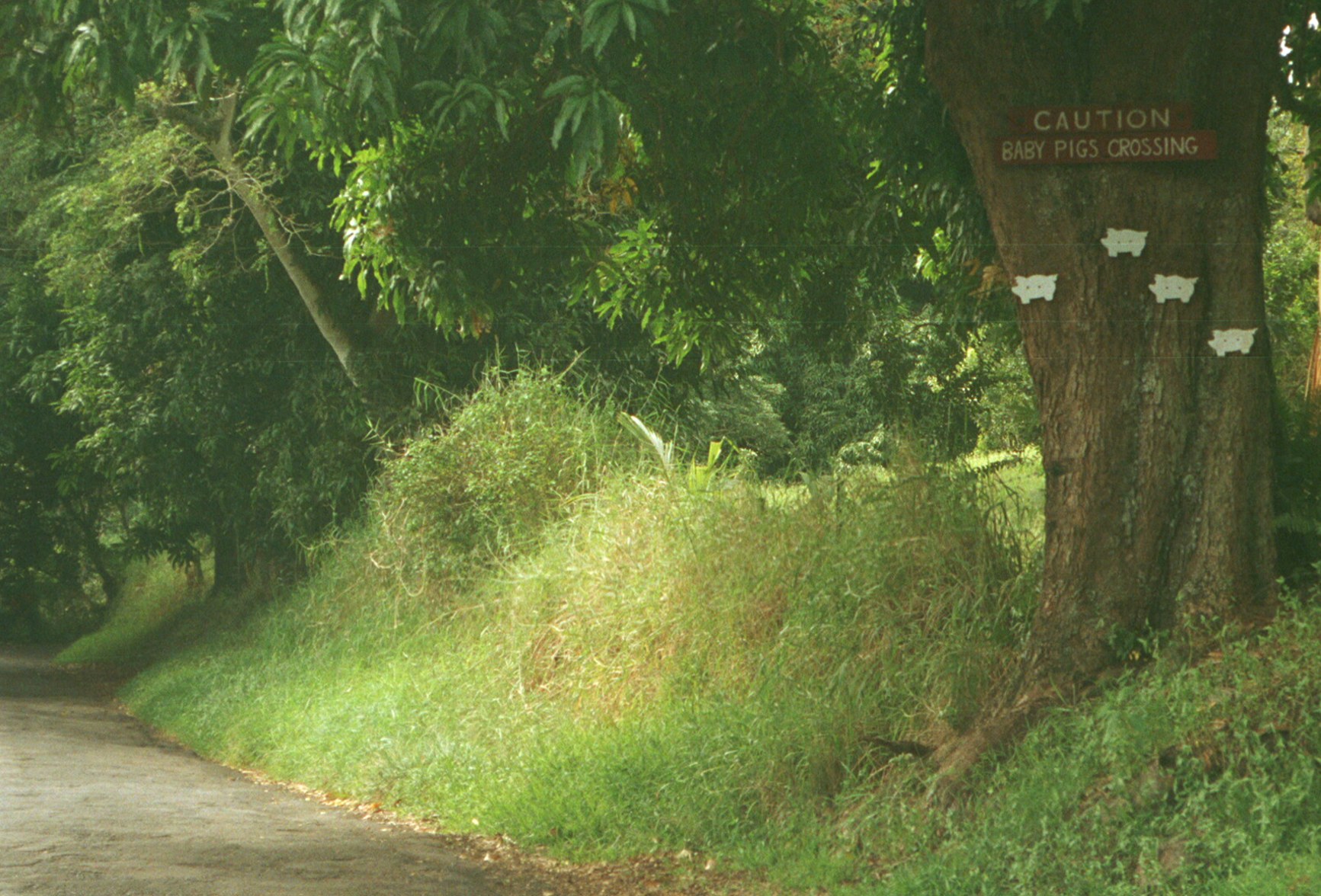
On a clear day you can see the Big Island and the peak of Mauna Kea some 70 miles away. The views are stunning. As you cross more sturdy but ancient one lane stone bridges you will see another famous sign warning of the “Baby Pigs Crossing.”
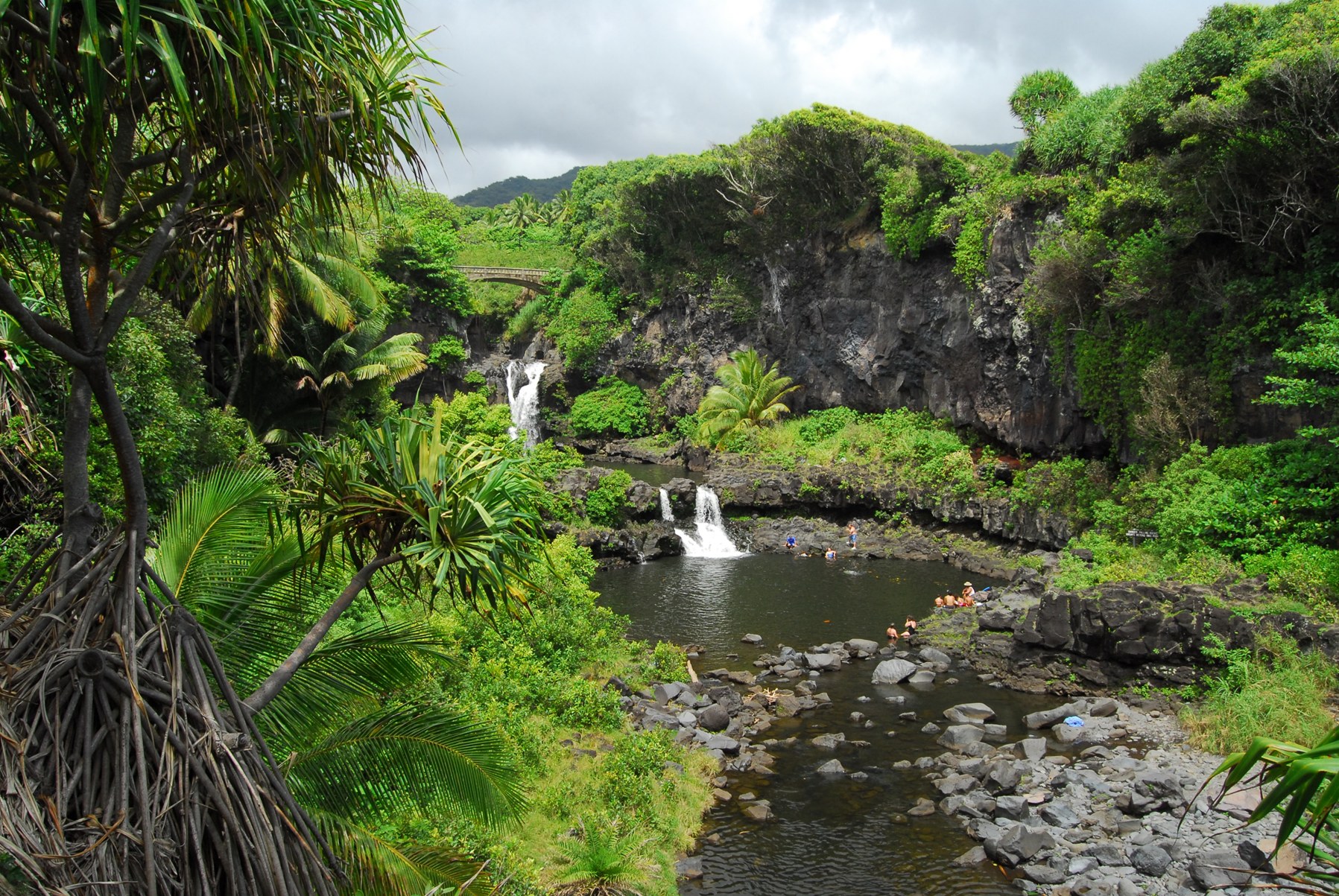
Homes dot the coastline all the way to ‘Ohe’o Gulch, also known as the Seven Pools. Sometimes they are referred to as the Seven Sacred Pools, although this bit of hype was dreamed up by an ad agency working on a campaign for the Hotel Hana Maui, or so it is said.
Once when I was in a shopping mall in Honolulu, I stopped for lunch at the food court and started up a conversation with a woman who worked at one of the stores. She vaguely knew of the Hana area and had no doubt heard of the Seven Pools, but got the adjective wrong when she asked about the - “Seven Deadly Pools.” Perhaps this is not what the ad agency had in mind.
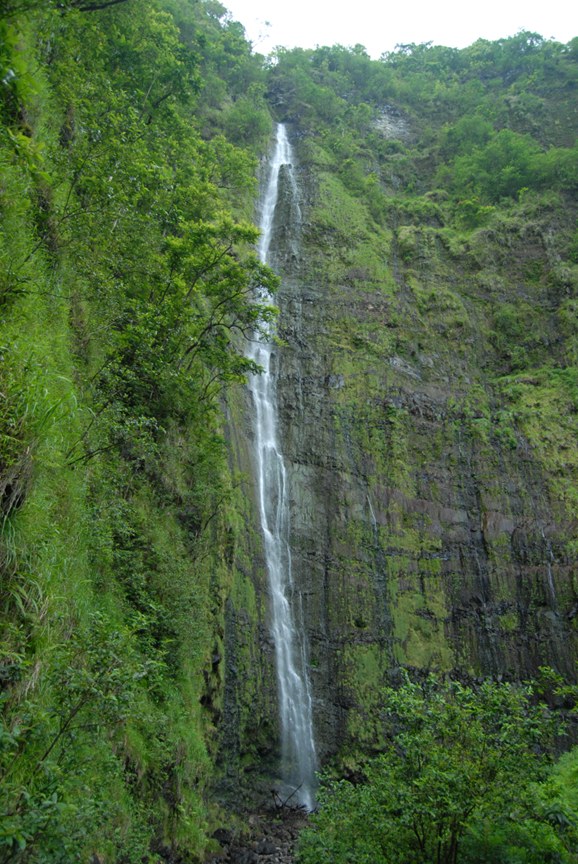
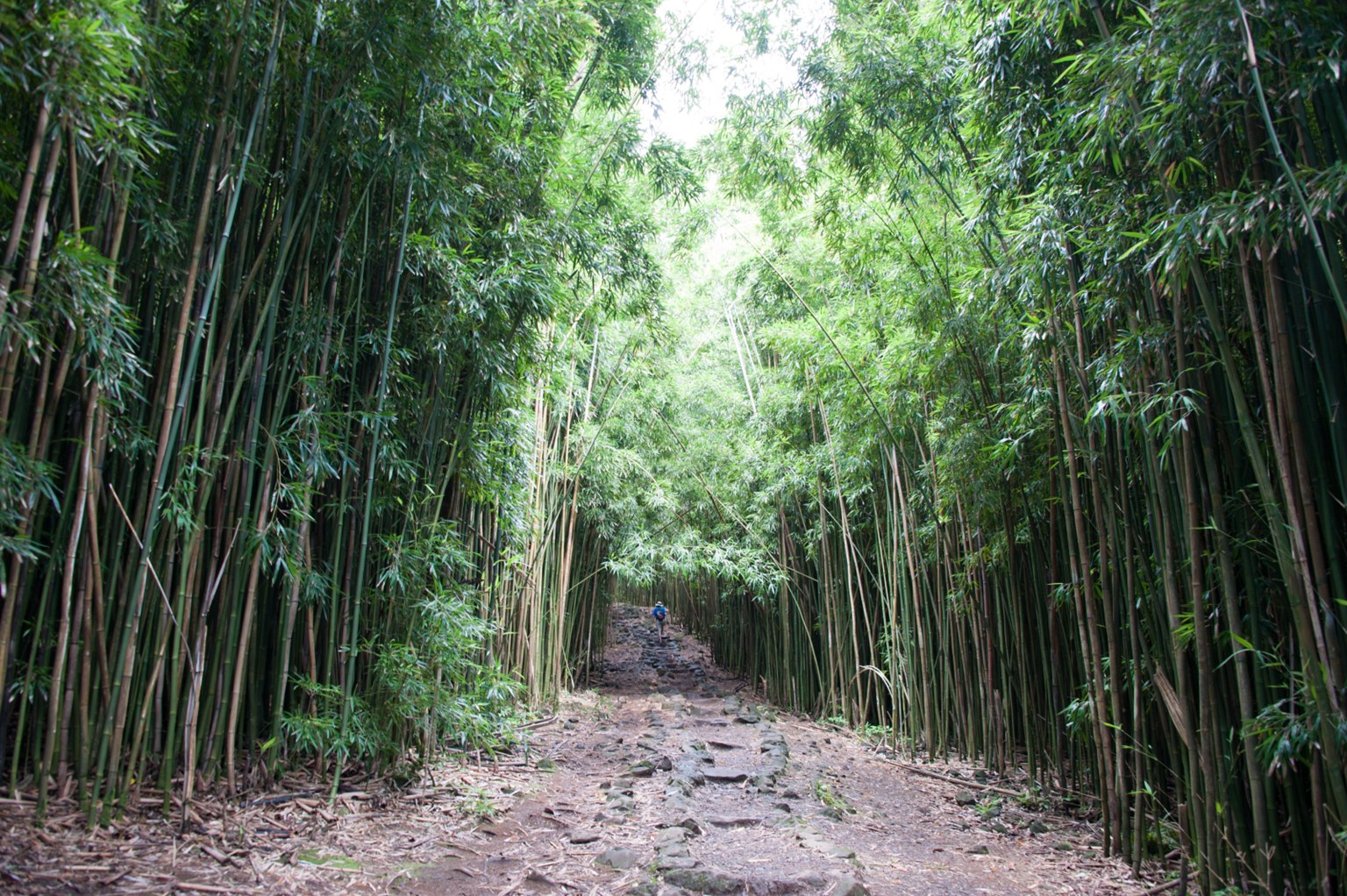
Crossing one more bridge, you enter Haleakala State Park. The series of pools is fed from streams that originate high up on the slopes of Halaeakala. The Pipiwai trail leads from the highway two miles inland and several hundred feet in elevation to the 400 foot tall Waimoku falls. Along this trail is an other-worldy bamboo forest.
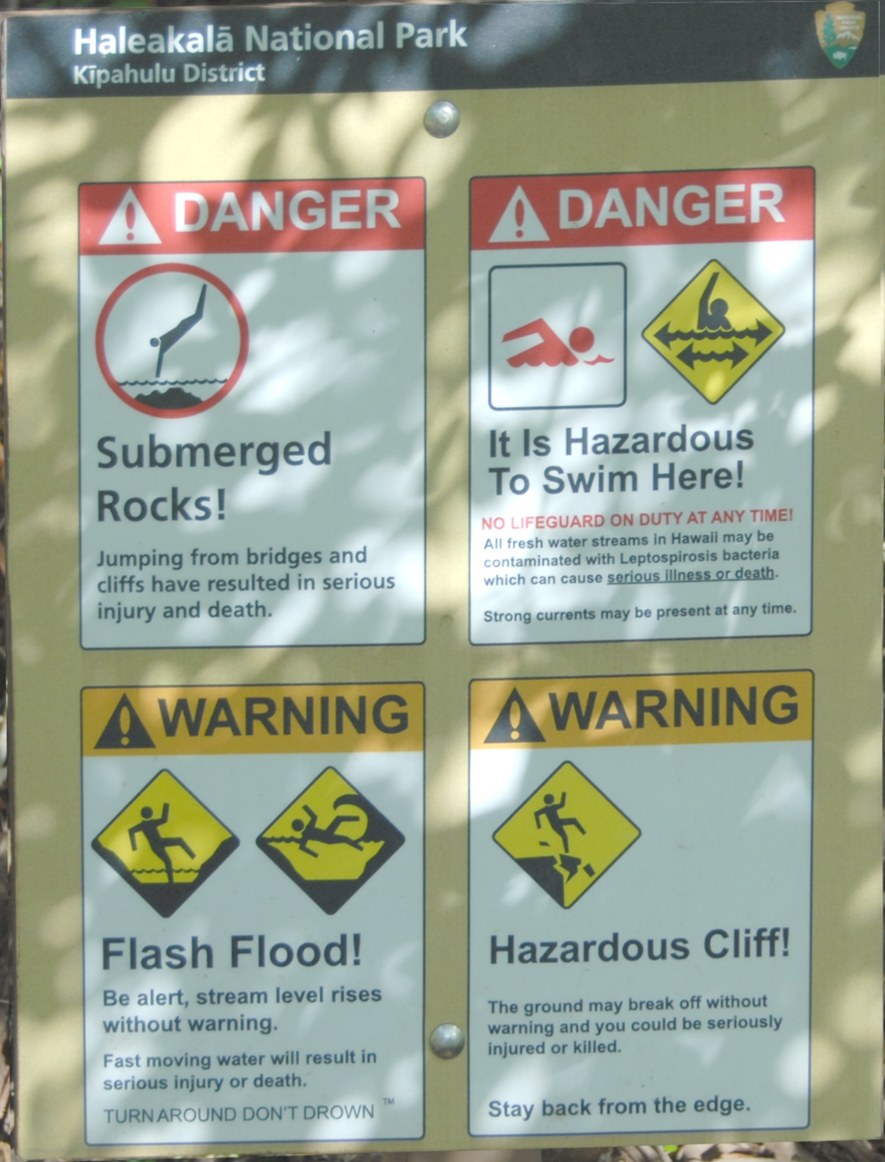
As you walk through the forest, humidity approaches 100% but the canopy of bamboo keeps the floor of the forest cool and almost clammy. Many visitors hike up the trail for a swim in the upper pools. This can be exhilarating or very dangerous depending on the time of year. During the rainy season, torrents of water can flood the pools and sweep unwary swimmers right over the falls.
I once hiked in on a side trail to a beautiful pool, but encountered signs warning: don’t swim here, you don’t want to die. It was not the rainy season but I took my photos and retreated as quickly as I could. That trail is now closed.
On this untouched part of the Hana coast, little has changed for centuries. One can get a feel for what pre-contact Hawaii must have been like.
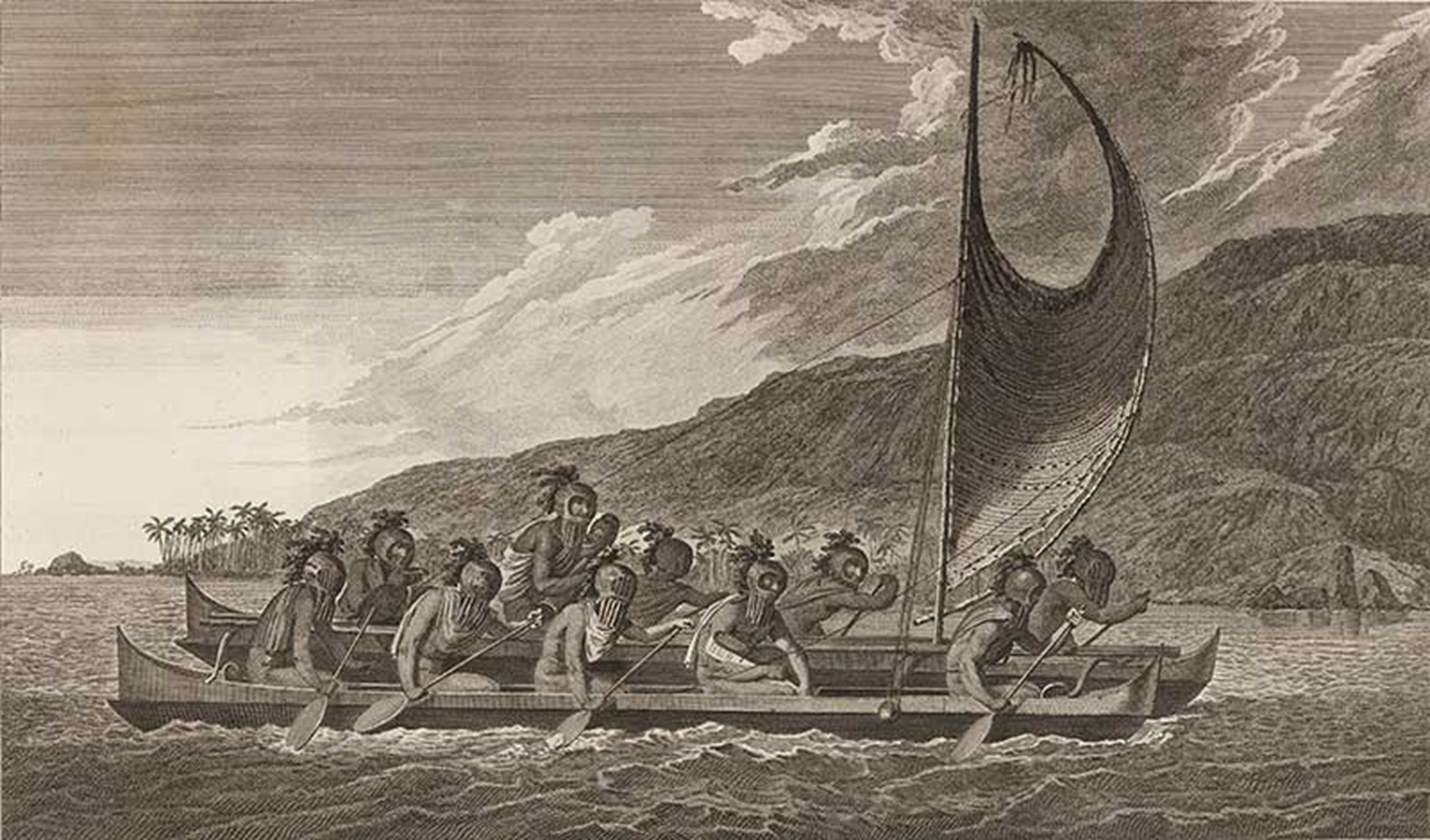
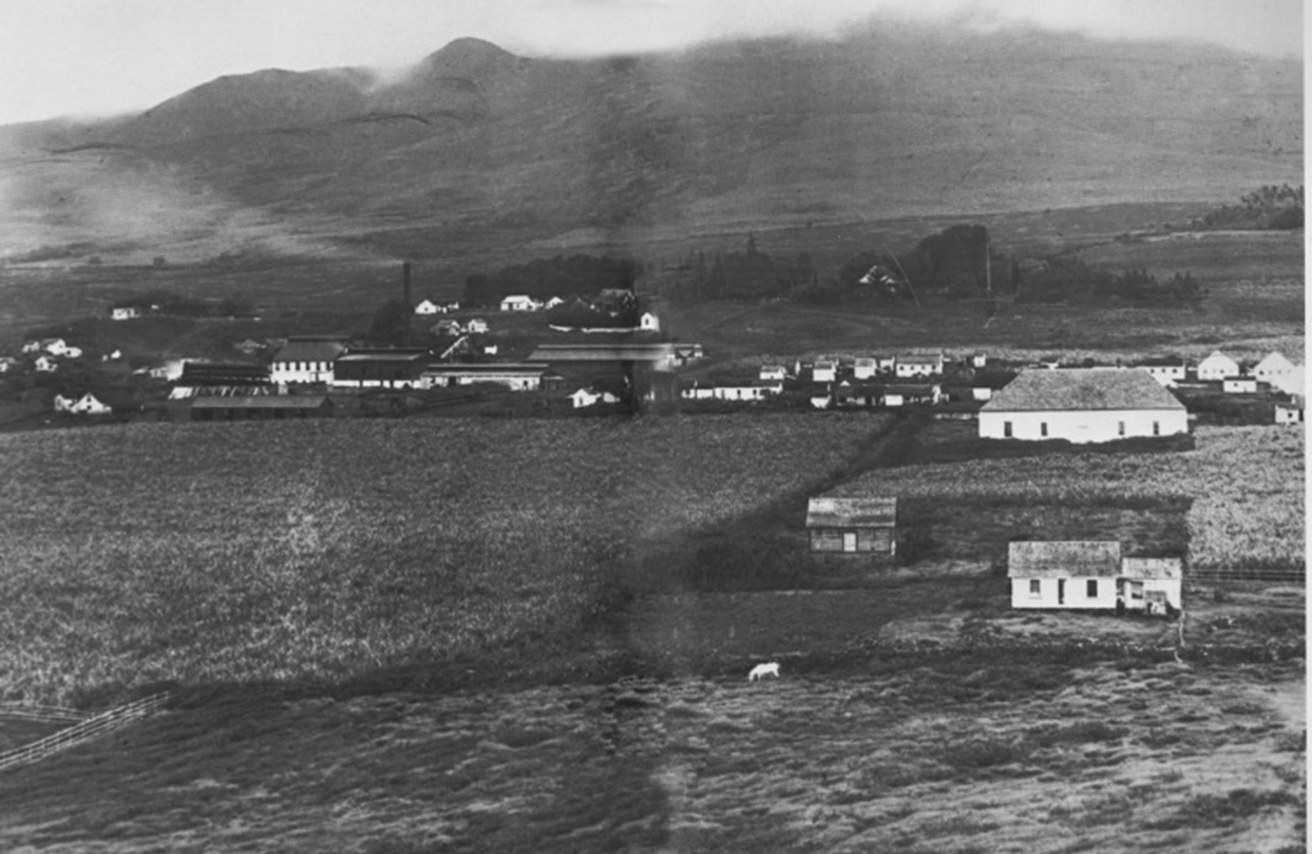
The Polynesians settled the island of Maui in at least three waves; the earliest possibly from the Marquesas Islands sometime before 450 AD and lastly settlers from Tahiti around 700 AD. From the Tahitians Hawaii acquired much of its traditional culture, language, economic system, the hereditary class system, religion, and customs such as the strict kapu (or taboo) system that affected all aspects of life.
Oral tradition records an unbroken chain of twenty-five rulers or Mo’i beginning with Pau Makua the first Ali’i Nui or Great Chief of Maui. Until the 15th century Maui was ruled by three chiefdoms: Wailuku, Lahaina and Hana. Eventually all of West Maui was consolidated at Wailuku, with Hana remaining independent. West Maui and East Maui permanently merged about 1550. From that time until conquest, Maui was ruled by a single joint royal family. Pi’ilani and his successors were known for the peace and prosperity that followed.
Many ancient structures on Maui are named in story but no longer survive. There was a fort at Ka’uiki Hill in Hana which was the scene of several bloody battles between chiefdoms on Maui or invasions from the Big Island. The last battle occurred when King Kahekili fought off a raid from the Big Island in the 1780s.
King Kamehameha the First defeated Kahekili, after a battle in 1790. Kamehameha then took control of Maui and made Lahaina the new capital of a unified Hawaiian Kingdom. Lahaina served as the center of government for Hawaii for nearly fifty years. During that time the town’s growth was fueled by the whaling industry. At the height of the whaling era from 1840 to 1865, as many as 500 ships anchored at Lahaina.
As I mentioned before, the other major industry on Maui was sugar. The first sugar mill on Maui opened in 1828. As the sugar industry in the islands grew, plantation workers were brought in or immigrated from China, Japan, Puerto Rico, Korea, the Philippines and Portugal. These immigrants became the foundation of the multi-ethnic culture of Hawaii today.
Two of those immigrants were the brothers Shoichi and Saburo Hasegawa. In 1910, they opened their store on the Hana Highway at the southern edge of Hāna town. The same year, Toshimasa Hasegawa, the first son of Shoichi and Kiku was born. Nine years later, Shoichi and his family returned to Japan while Saburo remained with the store. In 1926, Saburo went to Japan to meet with 15 year old Toshimasa and persuaded him to come back to Hana to help run the store and attend Hana School. Around 1932 Saburo convinced Shizuko Hirose and her parents to have Shizuko travel to Hana to marry Toshimasa. She was 18 years old and had to have had a taste for adventure to make her way by ship to the jungles of East Maui. Their first son Harry was born in 1934. In 1933, Saburo and his family returned to Japan leaving Toshimasa in sole control of the business.
The business grew and Hana survived the end of the plantation era and the 1946 Tsunami that killed 14, left another 550 homeless, and demolished 77 homes and other buildings. Tourism became a mainstay of the local economy.
In 1958 Toshimasa built a more modern Hasegawa General Store at the same location. Three years later, Harry, who had graduated from the Mid-Pacific Institute in Honolulu, and the University of Colorado in Boulder, returned to Hana to help run the store. A year later Nita Nebrija and Harry were married. In 1963, Neil Hasegawa was born, soon to be followed by Susan and Kelly. Harry assumed control of the store in 1964.
In 1961 Paul Weston wrote the song “The Hasegawa General Store.” The song became popular when it was sung by Pua Almeida on the radio show “Hawaii Calls.” Other artists that have sung it through the years are: Hilo Hattie, Ed Kenney, Haunani Kahalewai, Arthur Godfrey, Jack Demello & his Orchestra, and more recently Jim Nabors and Carol Burnett, as well as local musicians, George Paoa, Jessie Nakaoka & The Hoopii Brothers. The song put the store and sleepy Hana town on the map.
As the song lyrics say, “As you walk through the doorway what a great surprise. There’s a wonderful variety of merchandise.”
When you enter the Hasegawa General Store, it looks like “organized confusion,” as Harry once said. These days you’ll find everything from local produce to plumbing supplies, bags of poi to t-shirts and hats. Memory cards for your camera, postcards, books and sunscreen.
There’s always something interesting to discover at the Hasegawa General Store.
I have to mention the poi. Near the cash register is a box filled with bags of poi. Poi is a Hawaiian staple made from mashed taro root. It has a wallpaper paste-like texture and is purple. Because of its texture, the plastic bags are as irresistible as silly putty. Therefore there’s a sign above the box that says “please do not play with the poi.”
Unfortunately, in 1990, tragedy struck with the simultaneous burning of the Hana Gas Station and the Hasegawa General Store with the latter totally destroyed.
The fire was investigated as a case of arson. In a Los Angeles Times story about the fire, Hana resident Henry Kahulu, who managed the gas station said, "It couldn’t have been a local fellow. If Hana people don’t like you, they look the other way when they see you. They wouldn’t do anything malicious like this."
The fire came at a time when Hana was at risk for resort development. Developers wanted to put in a golf course. Apart from the addition of the 97 room Hotel Hana Maui and the end of the plantation era, not much had changed in Hana. The loss of the Hasegawa General Store, regardless of the cause, looked to many residents like a bad omen. In February 1991, the Hasegawa Service Station reopened at the original site and a small shop provided photo developing services, movie rentals, and a few items for sale but the full store was not operational.
Fortunately, owners of the Hana Ranch offered the use of the former Hana Ranch Theater as a substitute location for Hasegawa’s. The Theater had closed in 1979. And until fairly recently, posters announcing the movie “The Wiz” were still on display on the old building. Things don’t change very fast in Hana.
By August 1991, after extensive renovation, the Store resumed full operation. Neil and Harry have plans to build a new store on the site of the original. Planning has been underway for almost a decade. In Hana things take time, plus there were various permit and construction issues to deal with. The new store will include a deli and Laundromat. In a recent article in the Honolulu Advertiser Neil said, "People were coming to me and saying, ‘You know what? There are a lot of people who do their laundry on the other side of the island. They don’t have a washer or dryer, so on one day, they would take all of their clothes, do their laundry, do their shopping and come home.”
Keep in mind that the trek from Hana to “the other side” as the residents call it, is a 60 mile drive and takes about two hours each way. Plus gas typically costs about $5 or $6 per gallon on Maui. For many residents, the trip to the other side is a necessary weekly event. However as gas prices go up, people are looking for ways to do more of their business in Hana, which represents an opportunity for Neil and other business owners.
The Hasegawa General Store was selected as the 2003 Neighborhood Retail Business of the Year by the Retail Merchants of Hawai’i. In 2007, they won the “Maui Family Business of the Year” and in 2010 they were selected as the County of Maui “Family Business of the Year”. Having celebrated its 100th year of serving the Hana community in 2010, it is the oldest family owned business in Hana and one of the very few surviving family owned businesses on Maui.
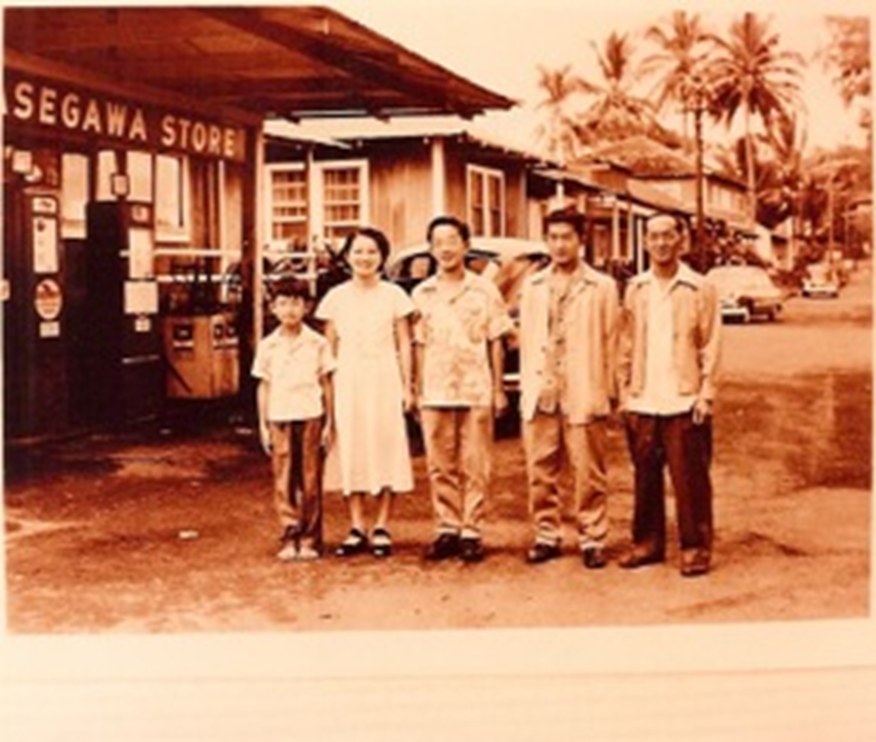
Above: the first Hasegawa General Store and the Hasegawa Family. Photo provided by Neil Hasegawa.
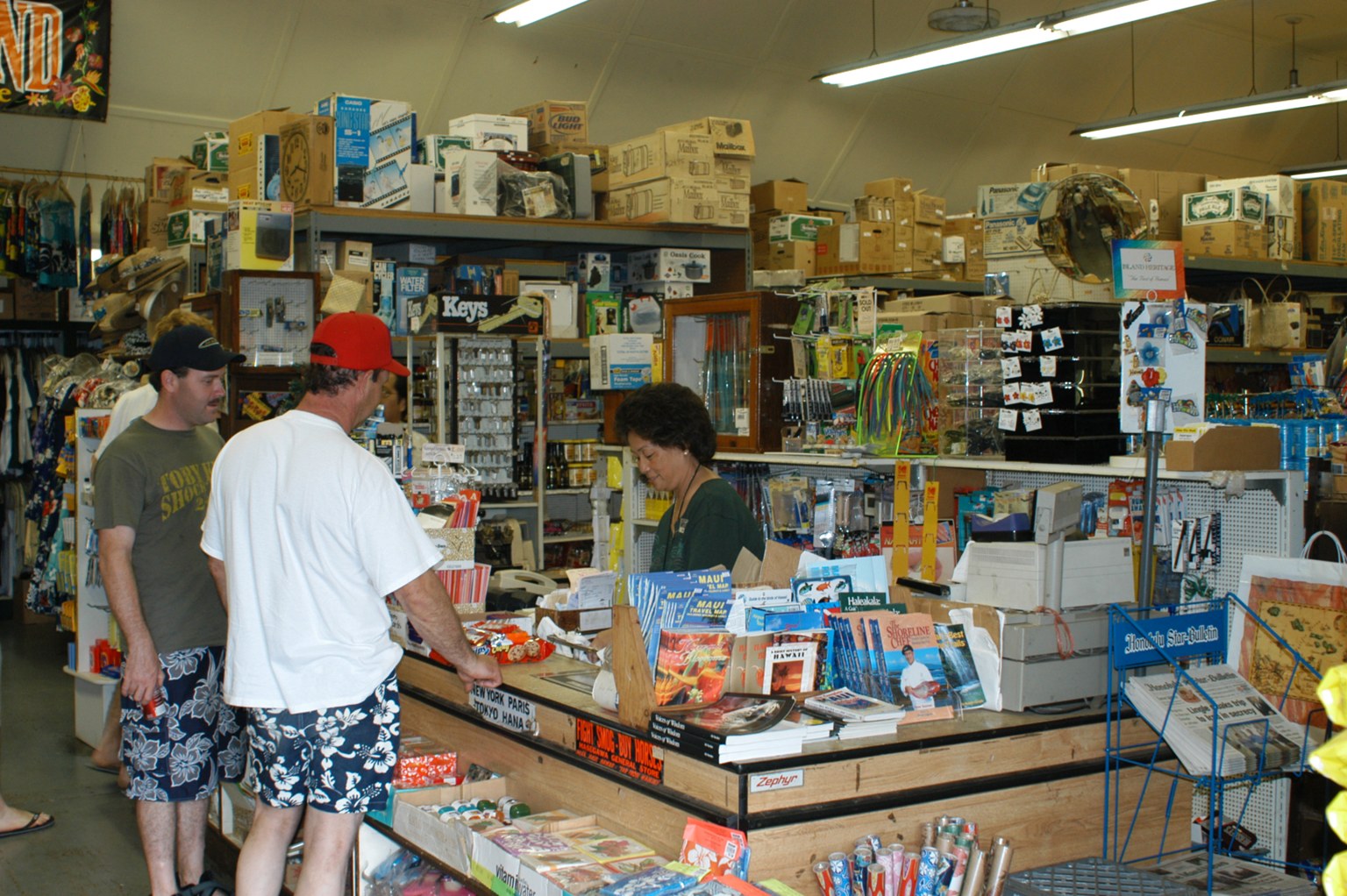
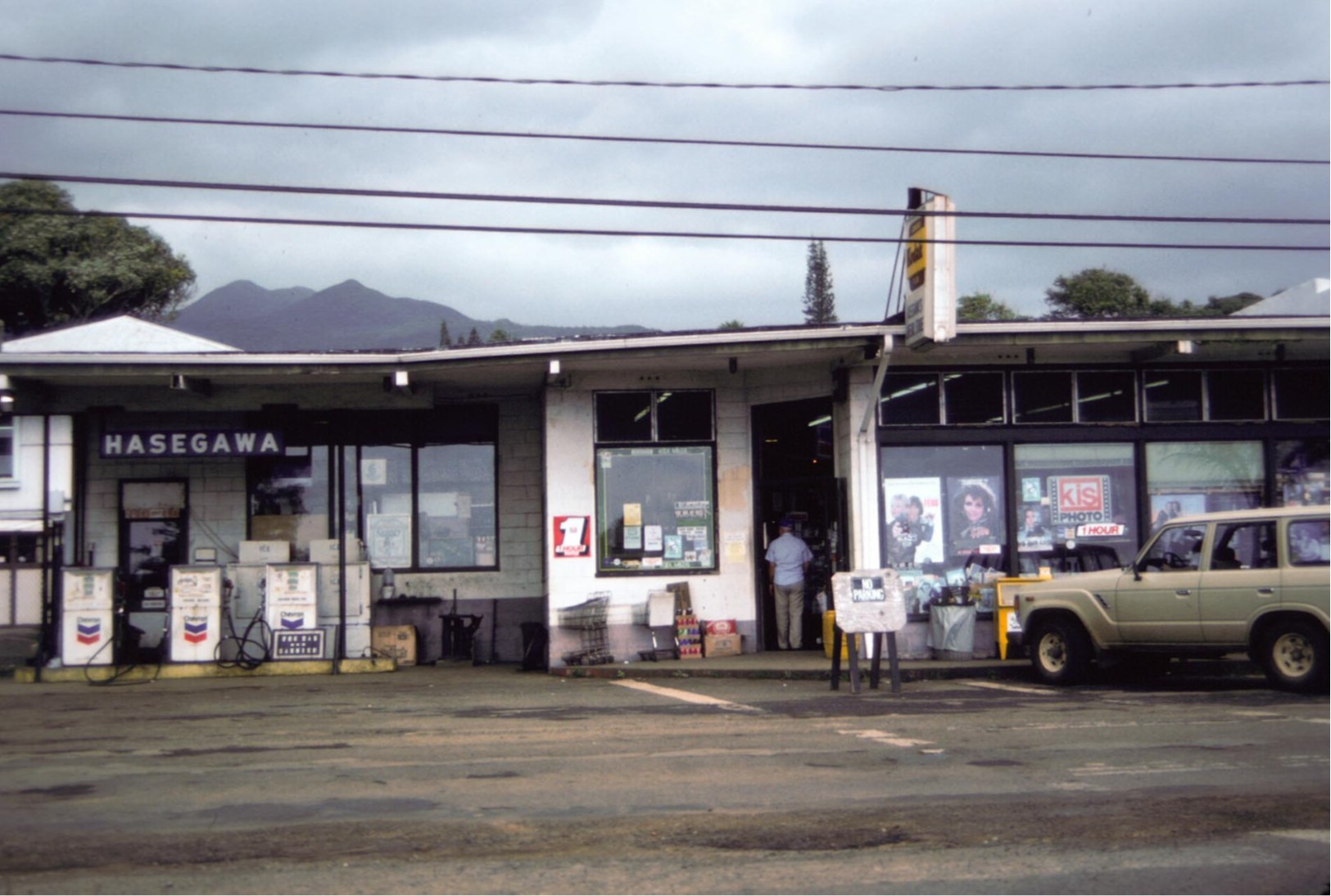
Original Hasegawa General Store
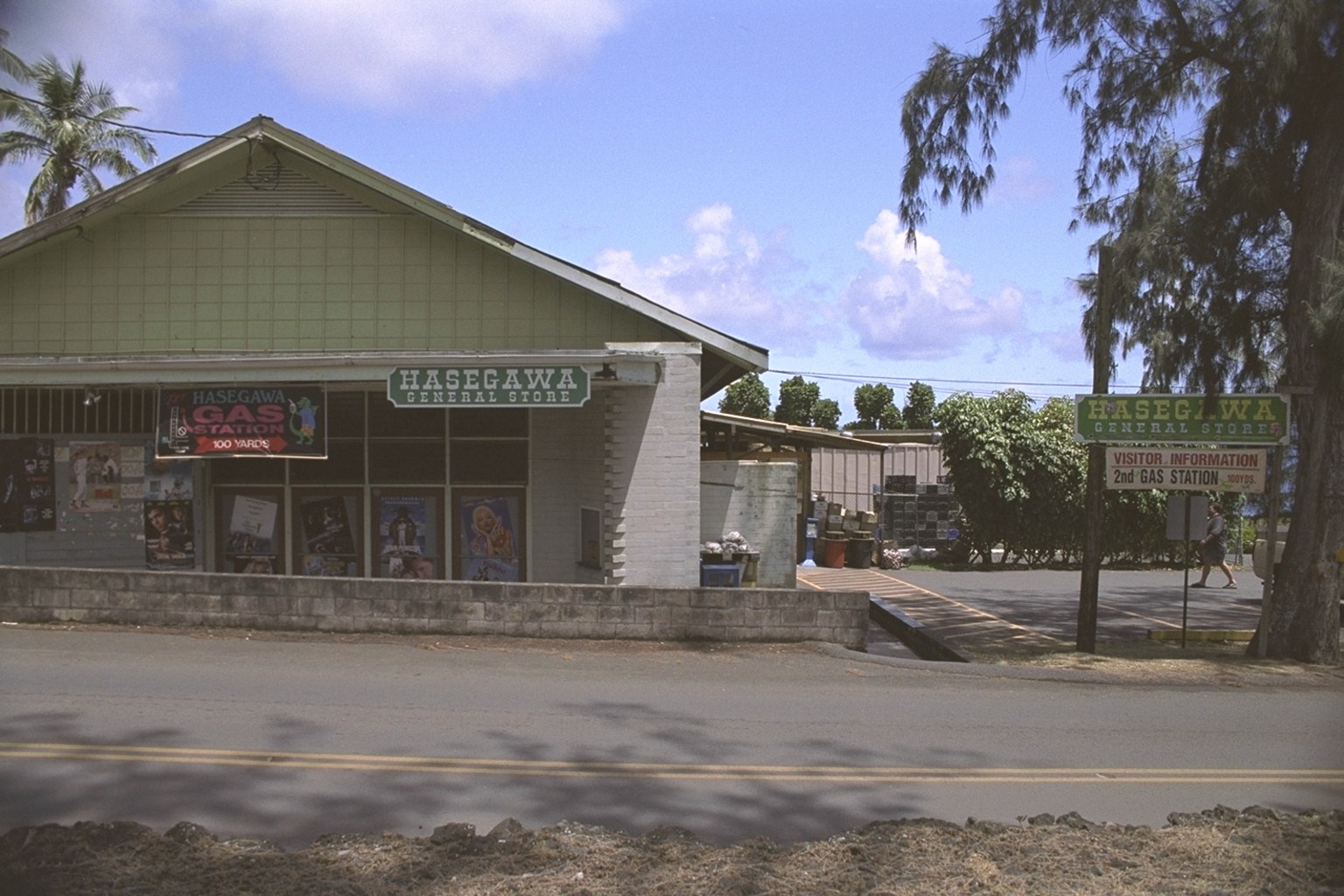
Hasegawa General Store in the old theater building
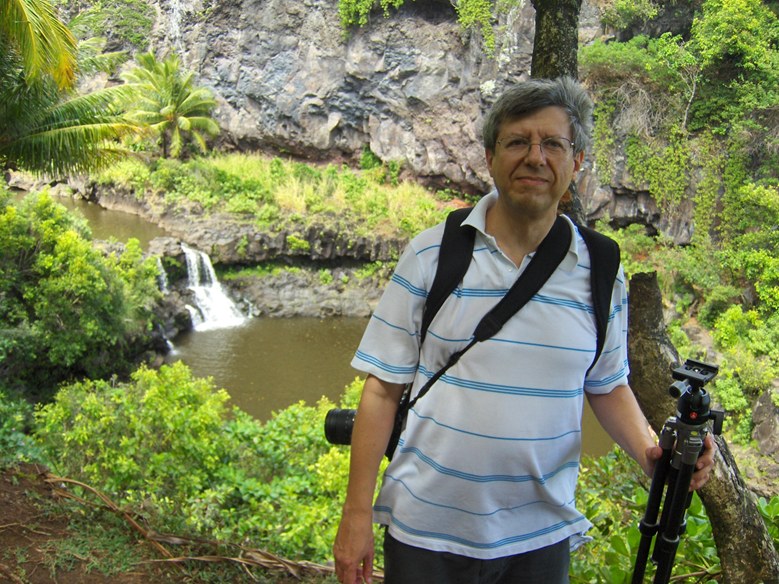
The author at the Seven Pools. Photo by Patricia Dahmke
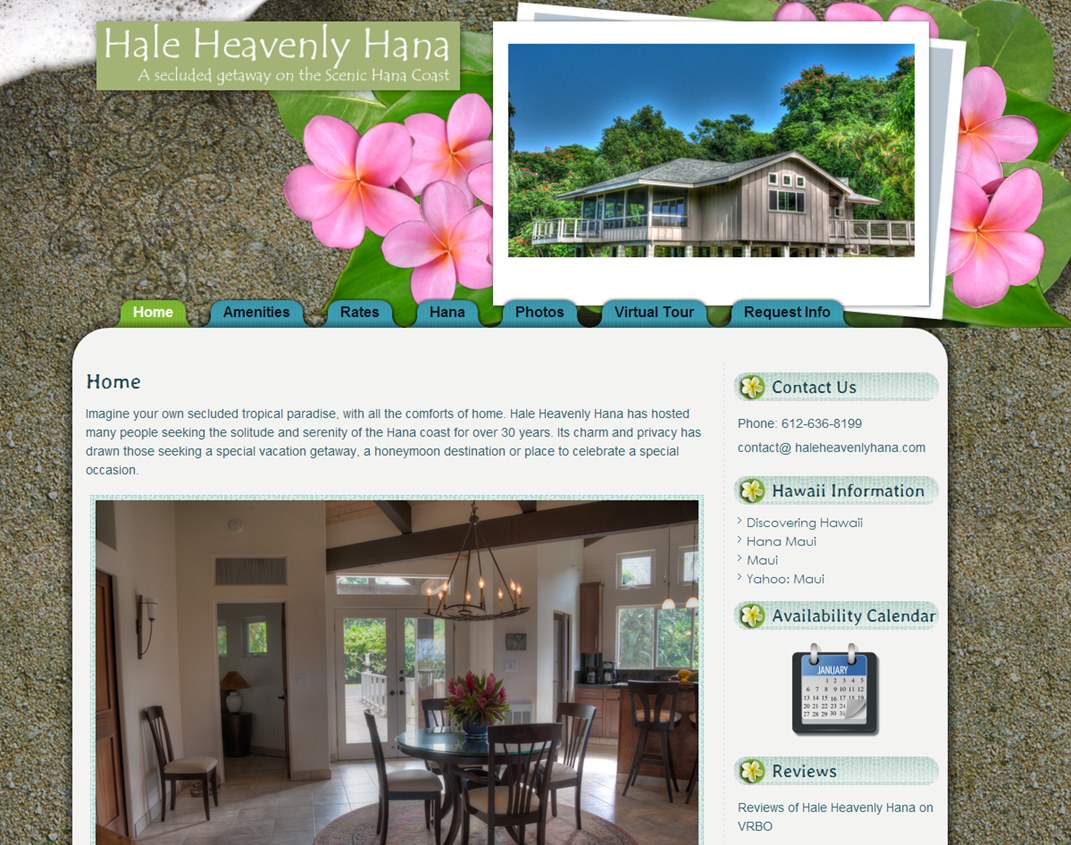
Over the past 30 years and over 20 trips to Hawaii, Hana has evolved from just a vacation spot to one of my favorite places. My interest with Hawaii began in the 1960s with Hawaii Five-O and Gilligan’s Island. I can’t remember a time when I wasn’t fascinated with islands and especially pacific islands. I’ve tried hard to keep Hawaii as my vacation spot and not mix it with business, but it was almost inevitable that they become mixed. In 1995 I suggested to Bob Reeds that we put up a website for Hale Heavenly Hana.
Within a year he stopped advertising in magazines because all of his business came from the website. When Bob sold the property in 2005 I continued to take care of the website for the new owners and in 2006 they built a new larger home to replace the small cottage.
Bob also introduced me to Stacy and Terry Lynch. They live nearby and are the caretakers of the vacation rental and also owners of Maui’s Best Flowers. In 1997 I designed a website for their business.
And then Bob introduced me to Harry Hasegawa. We setup a website for Hana using Hasegawa’s free map and business guide as a starting point. When Neil took over running the store in 2005, I started working with him to add more content to the site.
My company has also done some design work for a couple of other vacation rentals in Hana, and we donated web hosting for the state-wide Festivals of Aloha website.
The Festivals of Aloha began as Aloha Week and is an annual celebration of Hawaiian Culture. Each island and community organizes events that occur throughout the year, but most are in September and October.
My first authentic luau experience was in 1997 in Hana. The festivities began with the arrival of the Royal Court of Hana. Descendants of Hawaiian royalty were escorted into the tent by several formidable guards with sharp spears.
As in ancient times, there are taboos against standing where royalty walks, and centuries ago even if one’s shadow fell on a chief, the punishment could be death. One of the guards noticed that I was standing too close as they came by and if looks could kill, I would not have survived the evening. While keeping a close eye on that spear, I very quickly moved out of the way.
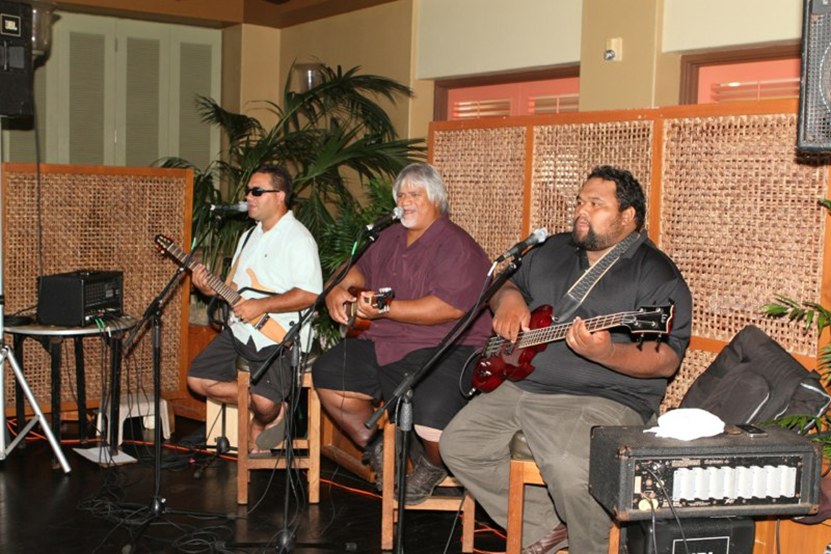
The evening included music by some of Hana’s own exceptional musicians. In October, 2012 my sister and I went to Hana and I planned the trip so we’d be there for the Festivals of Aloha events. We made reservations for the luncheon held at the Hotel Travaasa and were fortunate to be seated next to Ward Mardfin, another mainland transplant to Hana. Like me he discovered Hana at a young age, but he decided to move there. Ward is an active supporter of the Hana Cultural Center and says he is working on a history of Hana. That guy has a lot of good stories to tell.
In the evening we went to the Hana talent show. Hana has many talented residents. One of the things I like about Hawaii is its active and unique culture. If you visit Hawaii you’ll quickly realize that although it is the 50th state, it is also a nation with its own vibrant culture and heritage. It is a part of the United States, but in name only.
And I think that is a good thing. But imagine a nation with about the same population as Nebraska, with its own robust music and recording industry.
Its remoteness, even in this age of instant communications, is its salvation. In particular, Hawaiian musicians and those who practice and perform the hula and talk story are Hawaii’s celebrities. There is no comparison to other states in the mainland US.
So there we are on a Saturday night in Hana on a well-lit ball field listening to music, watching Hana’s sons and daughters perform the hula and recite ancient chants as my friend Neil Hasegawa, chairman of the Hana Festivals, videotapes the dancers.
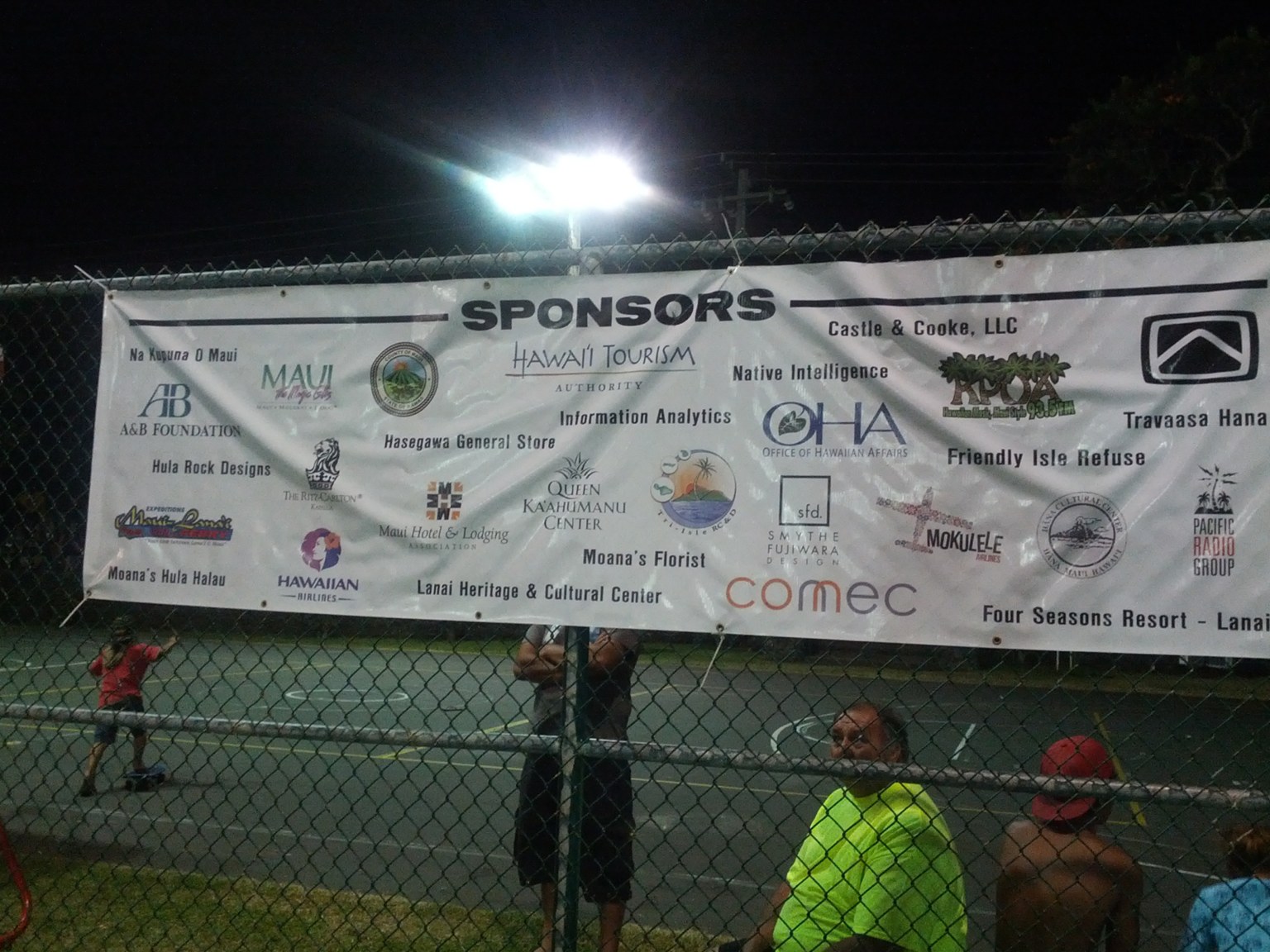
I noticed a large vinyl banner hanging from the chain link fence. On the banner are the logos of sponsoring organizations. And then I notice my company’s name mixed in with all the Hawaiian businesses. That’s when I realized that in a small way that I’d become a part of this community.
So that’s my story about a very special place, an island unto itself.
Now I’ll answer the question that is probably on your mind: will I ever move to Hana? The thought has certainly crossed my mind many times. In the mid-1980s before I discovered Hana I considered moving to the Big Island, but decided it was too far away from my family. But for now I’ll keep on dreaming of Hawaii and looking forward to my next visit to Hana.
Books and historical sources
Youngblood, Ron, and Leonard Lueras. On the Hana Coast: Being an Account of Adventures, Past and Present, in a Land Where the Hand of Man Seems to Rest Lightly. Honolulu: Emphasis International, 1983. ISBN 978-9627073024.
Bartholomew, Gail. Maui Remembers: A Local History. Honolulu: Mutual Publishing, 1994.
Handy, E. S. Craighill, and Elizabeth Green Handy. Native Planters in Old Hawaii: Their Life, Lore, and Environment. Honolulu: Bishop Museum Press, 1972.
Government/history sources
Historic American Engineering Record. Hana Belt Road, HAER No. HI-75. Washington, DC: National Park Service, Historic American Engineering Record.
Hawaii Department of Public Works. Annual Report of the Superintendent of Public Works, 1900–1959. Archives of Hawaii.
Other periodical sources
Youngblood, Ron. “Kanaio Resident Finishes At Home.” The Maui News, May 25, 1986, A-3.
Lum, Curtis, "Hasegawa General Store still an icon", Honolulu Star Advertiser, August 13, 2008, C1
References and Sources
Wikipedia
Neil Hasegawa
Hasegawa Family History
HanaMaui.com website
On the Hana Coast, 1987. ASIN: B000PSG7C2
Lindbergh, A Biography, Leonard Mosley
GoHawaii.com
All photos (except of course the black and white historical photos and drawing or where noted) are by Mark Dahmke.